
Blogs
What Type Of Doctor Treats Scoliosis And When To See A Scoliosis Specialist

A general practitioner can treat someone with scoliosis, but that’s not the same as treating the scoliosis. While general medical care tends to focus on symptom relief, scoliosis-specific treatment supports scoliosis-specific results. Due to the complex, often progressive, nature of scoliosis, a specialized assessment and treatment approach is recommended.
Specialized scoliosis assessments are suitable for a number of people. If a child has known risk factors, informed parents may want them screened, or if a child is showing early signs of scoliosis, guidance from a specialist supports early detection. A specialized spine assessment is also suitable for adults experiencing scoliosis symptoms and/or for anyone needing further clarification on past X-ray results.
A scoliosis specialist should be seen if there are concerns about a current, future, or past diagnosis.
Doctors Who Treat Scoliosis
There is more than one way to treat scoliosis, and depending on the chosen approach, scoliosis can be treated by scoliosis-specific physical therapists and scoliosis chiropractors, and in cases that require surgical treatment, orthopedic surgeons and neurosurgeons can perform scoliosis surgery.
What’s important to understand, however, is that scoliosis can be highly responsive to nonsurgical scoliosis treatment that considers the underlying cause of pain, progression, and increasing symptoms: the spine’s misalignment and loss of balance.
What is Scoliosis?
Scoliosis is a condition that causes an unnatural sideways spinal curvature to develop, and the rotational component causes certain vertebrae to twist unnaturally. Some scoliosis curves are assessed as stable, but many are progressive, especially if known curve-progression triggers like growth and spinal degeneration are occurring.
Scoliosis affects all ages, and growth is the main trigger for progression in children, and there are a lot of factors that can contribute to adult scoliosis curve progression such as the effects of negative lifestyle factors over time, changing spinal health, bone health, weak muscles, and postural decline.
When it comes to managing scoliosis during growth or declining spinal health, risk of curve progression can be high, and a proactive treatment plan needs to be individualized. Experienced scoliosis specialists understand the many different variables that can contribute to curve onset/progression.
Understanding a patient’s situation means understanding their curve and accurately predicting if, how much, and how fast, a curve is going to increase.
When To See a Specialist
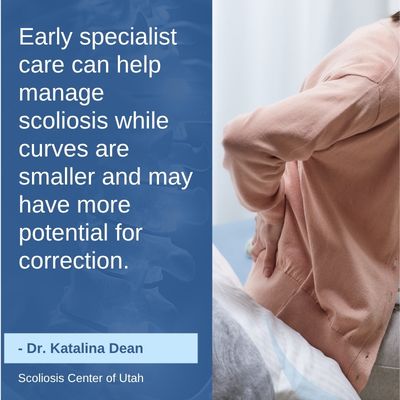 Because so many cases of scoliosis are progressive, seeing a specialist at the right time can mean diagnosing scoliosis early for the opportunity to manage curves proactively, while they are smaller and there may be more potential for correction.
A specialist assessment considers a patient’s spine, posture, strength, and mobility, and predicts a curve’s progression risk for treatment planning.
Risk Factors
So if you are looking after a child and know there are risk factors in place such as a family history, early evaluation by a specialist screens for signs of scoliosis and guides parents on whether further testing is needed.
Children with a family history are more at risk for developing scoliosis, and because most cases become noticeable around the onset of puberty, close monitoring as adolescence approaches is part of a proactive treatment approach. Females are also more prone to progression and needing treatment, so gender is also considered a risk factor.
Adolescent idiopathic scoliosis is the most common type of scoliosis, and adolescents are vulnerable to rapid advancement due to the unpredictable nature of growth during puberty, and postural changes are usually the earliest sign.
Postural Changes
Whether a child has a family history or not, if uneven posture is a concern, a specialist assessment considers the changes and if further testing is needed to confirm a diagnosis.
A patient’s initial assessment considers a patient’s family and medical history followed by a physical examination, often with an Adam’s forward bend test. Examining a patient’s spine and torso while in a forward-bend position makes it easier to see the spine and postural changes related to scoliosis: uneven shoulders, uneven shoulder blades, uneven hips, and an arch in the rib cage.
It’s not always clear when poor posture is simply poor posture, or when it indicates structural issues with the spine, and this is especially true with teens, but a timely spine assessment directs parents on what the next steps should be.
Diagnosing Scoliosis
The early signs of scoliosis can be easy to miss, but a specialist knows exactly what to look for, and if indicators of scoliosis are found, an X-ray is the next step. An X-ray is needed to confirm the spine’s lateral curve, rotation, and measure curve size.
Scoliosis X-rays involve taking images of the spine from different angles and a number of measurements. From curve size to a patient’s angle of trunk rotation, their accuracy is needed for personalized treatment recommendations. Standing X-rays are recommended because they provide images of the spine while in a natural upright position, and a specialist knows how to read and interpret the results of a scoliosis X-ray.
Diagnosing scoliosis early has a number of benefits, including managing progression during growth in children, instead of after growth spurts have triggered progression, and before a cycle of uneven posture, loading, and wear is established in older adults.
Being diagnosed by a scoliosis specialist will include specialist recommendations. A child’s specialist assessment may involve determining bone age to predict potential progression based on remaining growth, and older adult patients need their spines assessed for instability.
A comprehensive assessment tells clinicians, physical therapists, and chiropractors what they need to know about a patient’s spine and posture.
Treatment recommendations may involve bracing as early intervention, a scoliosis-specific exercise plan (ScoliBalance®, and specialized Chiropractic BioPhysics® (CBP) that involves a deep analysis of the spine, its mobility, and stability. CBP is so specialised that only 1 percent of the world’s chiropractors practice it, but it’s offered to patients of the Scoliosis Center of Utah.
Some patients with severe curves that are progressing rapidly may require surgical intervention (usually spinal fusion) and are referred to an orthopedic surgeon.
Re-Assessing Scoliosis
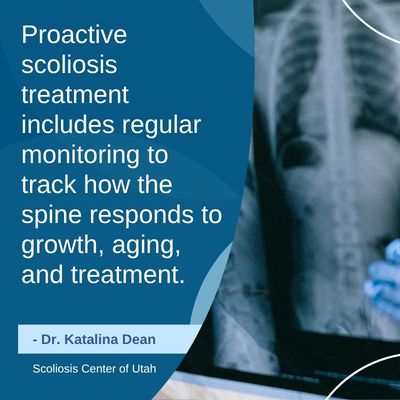 A proactive treatment plan includes close monitoring because scoliosis can change quickly, so a specialist will be re-assessing a patient throughout the course of treatment. Attention will be paid to how the spine responds to growth, age-related changes, and treatment.
Larger curves usually require a broad treatment plan, and scoliosis-specific physical therapists can personalize corrective exercise plans that use Mirror Image exercise to teach postural awareness and restoration. Curve flexibility and the spine’s surrounding muscle strength and balance need to be assessed, along with spinal stability in older adults for fall prevention.
When adults come in for an assessment, we need to determine if the curve is pre-existing from childhood or has developed in later adulthood as degenerative scoliosis. Comparing past and current X-rays helps us understand how a patient’s curve has been shaped over the years, and spine specialists can also provide clarification on past X-ray results and/or treatment recommendations.
Some patients want to be re-assessed by a specialist if they were diagnosed by a general doctor and given general treatment guidance, or if they want more clarification on a past X-ray and treatment advice. This is always a good idea because scoliosis is a complex progressive condition that benefits from a specialised treatment approach.
Conclusion
Effective treatment responds to a patient’s changing treatment needs, manages curve progression, and minimizes the impact of scoliosis in general. It focuses on the underlying cause of symptoms: the spine’s misalignment.
The effects of a misaligned spine can be felt from the head to the feet, and restoring balance to the body and spine support stability, nerve communication, healthy posture and movement.
Scoliosis-specific physical therapists, chiropractors, and spine surgeons can treat scoliosis, and while a general practitioner can diagnose and treat patients with scoliosis, a specialist is needed to assess and treat the spine’s misalignment effectively for long-term symptom and progression management.
Scoliosis specialists consider all variables that may contribute to a patient’s curve and make suitable treatment recommendations that may involve monitoring, scoliosis-specific physical therapy, corrective bracing, specialised chiropractic care, a combination of treatments, or surgical referral.
An unnatural spinal curve needs to be addressed, and many idiopathic scoliosis patients respond to minimally invasive nonsurgical treatment designed by a specialist for accuracy and precision.
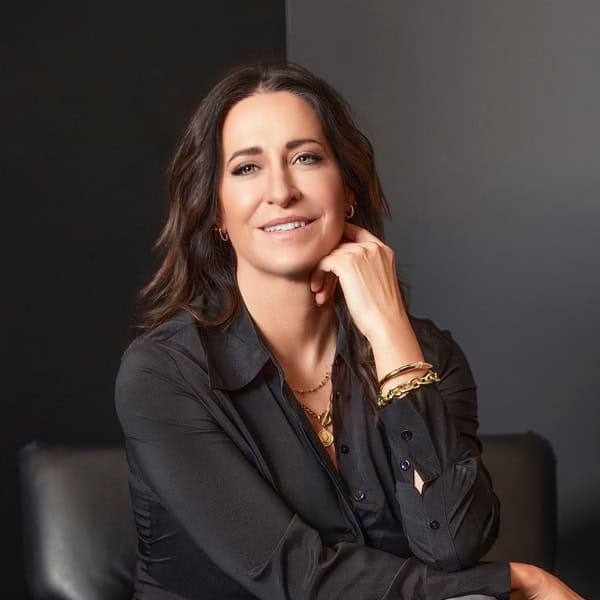
Dr. Katalina Dean
Dr. Katalina Dean is the founder and clinical director of Scoliosis Center of Utah, in Midvale, UT. Her team specializes in posture correction, spinal rehabilitation, and non-invasive scoliosis care and bracing.
Call Today
Do You Qualify for Care?
Schedule an Appointment Below