
Blogs
What Is Lordosis? Causes, Symptoms, and Treatment Options
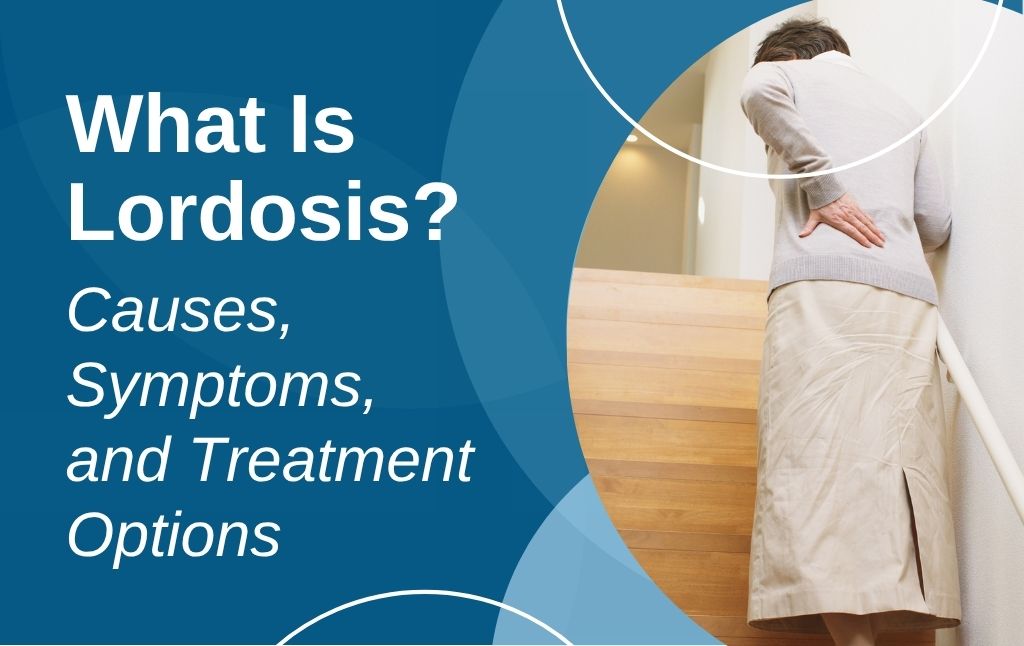
The spine’s healthy curves give it flexibility, strength, and balance, but there are a number of unhealthy spinal curves that can develop. Lordosis describes the natural inward spinal curve found in the neck and lower back.
Too much lordosis is referred to as hyperlordosis and disrupts the spine’s overall balance and stability and can lead to a collapsing of the spine. Symptoms can include a swayback appearance and low back pain. Treatment options for pain management would be chiropractic care and physical therapy. If you would like to correct the sway back to prevent collapsing of the spine, we recommend seeing a Biophysics Chiropractor who is trained to reshape the spine. This is done with a 2-point bending traction, bracing, and exercise specific for lumbar lordosis that works towards stretching thighs and tight hip flexors and strengthening the glutes and low back muscles. This may restore the lower back curve to a healthy and stable position.
Overall spinal health is shaped by a number of factors, one of which is the health of its curves.
Healthy Spinal Curves: Lordosis
Lordosis describes the spine’s natural inward curve in the cervical and lumbar spinal sections, but if a person’s lordosis increases and becomes excessive, this can also be referred to as hyperlordosis.
Kyphosis describes the opposite curve type that curves outward and is found in the thoracic spine. The spine’s lordosis and kyphosis balance each other out, so a loss of one may affect the other.
When a healthy spine is viewed from the front or back, it will appear straight, but when viewed from either side, it takes on an ‘S’ shape, and this is because the spine is curved at each of its main sections.
The cervical spine refers to the neck. The thoracic spine is the largest spinal section (middle/upper back), and the lumbar spine refers to the lower back.
Each spinal section has unique and important roles to play in how the spine functions, but in order to do so, the spine’s healthy curves have to balance each other out for stability and function.
For example, a main role of the cervical spine is supporting the weight of the head and the neck’s range of motion, and the thoracic spine attaches to the rib cage so anchors the torso and protects the heart and lungs inside the thoracic cage, and the lumbar spine’s load-bearing nature has to support the spinal sections above and upper body weight.
The spine’s natural lordosis is found in the neck and lower back, but if the spine curves too far inward, postural changes, pain, and instability may develop, so let’s take a look at the symptoms of too much lordosis.
Cervical Lordosis Causes
Hyperlordosis is more common in the lower back, but it can also affect the cervical spine. A healthy range of cervical lordosis is estimated to be within 20 and 40 degrees, and too much lordosis means the neck’s inward curve is excessive.
Common causes for cervical hyperlordosis include chronic poor posture, injury, trauma, degenerative changes in the cervical spine, or an underlying spinal condition such as scoliosis.
Chronic poor posture can, over time, strain the neck and cause a loss of its healthy lordosis. Injury and trauma can contribute by causing structural changes or ligament strain. Degenerative changes to spinal health can include disc and/or facet joint degeneration that can cause increasing instability in the neck and make it difficult to maintain its healthy curve. Conditions like scoliosis cause the spine to curve unnaturally to the side and rotate so it can disrupt the cervical spine’s healthy position and alignment.
Cervical Lordosis Symptoms
Symptoms of cervical hyperlordosis can vary based on a number of factors, including cause, but may include neck pain and stiffness, tension headaches, numbness and tingling in the extremities due to nerve compression, and a reduced range of motion in the neck.
Cervical Lordosis Treatment Options
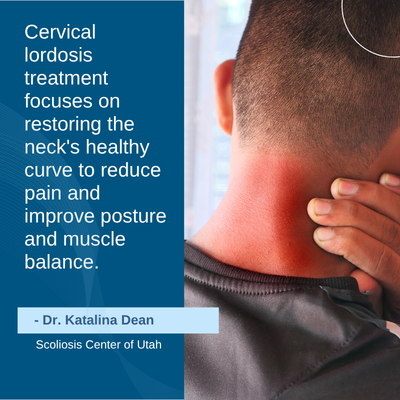 Treatment for cervical lordosis focuses on restoring the neck’s healthy curve to reduce pain, improve muscle support and balance, and improve posture.
Conservative treatment options may include targeted physical therapy, postural restoration, anti-inflammatory medications, and in severe cases that haven’t responded to nonsurgical treatment, spinal surgery may be recommended.
The underlying cause of the loss of healthy lordosis has to be addressed, so in cases where an underlying condition like scoliosis has caused the imbalance, the scoliosis needs to be treated for overall improvement to spinal health, including the cervical spine.
Lumbar Lordosis Causes
The lumbar spine is vulnerable to a number of issues, injuries, and conditions due to its load-bearing nature. A healthy range of lumbar lordosis is 40 degrees.
Common causes of too much lordosis in the lumbar spine can include trauma, tight hip flexors and weak glut muscles, poor posture, excess weight in the midsection, and underlying conditions such as spondylolisthesis.
It’s not just the spine that has to maintain its healthy curves; it needs help from strong, balanced, and supportive muscles, so muscle imbalances and weak abdominal muscles may also contribute.
Lumbar spondylolisthesis is a condition of instability that involves a vertebral body in the lower back slipping forward and onto the one below, and the slip can cause changes to the spine’s lordosis.
Lumbar Lordosis Symptoms
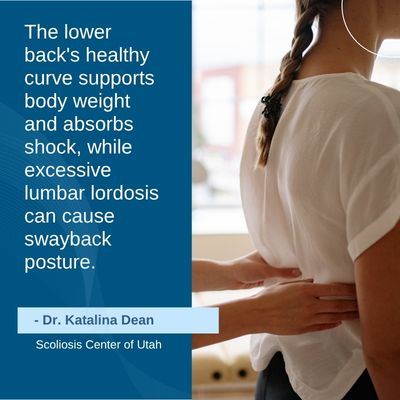 The lower back’s healthy curve is needed to support body weight and absorb shock, and if the lumbar spine develops excessive lordosis, this is also known as swayback due to the postural changes it causes.
Because of the lumbar spine’s deep inward curve, it can push the abdomen forward which causes the buttocks to protrude excessively. Postural changes are common.
Additional symptoms include a noticeable gap between the lower back and floor when attempting to lie flat on a surface, lower back pain, muscle pain, and muscle weakness.
Lumbar Lordosis Treatment Options
Treatment options for pain management would be chiropractic care and physical therapy. If you would like to correct the sway back to prevent collapsing of the spine, we recommend seeing a Biophysics Chiropractor who is trained to reshape the spine. This is done with a 2-point bending traction, bracing, and exercise specific for lumbar lordosis that works towards stretching thighs and tight hip flexors and strengthening the glutes and low back muscles. This may restore the lower back curve to a healthy and stable position.
Treatment depends on the underlying cause, and if a structural issue such as spondylolisthesis is a contributing factor, it needs to be addressed to restore the lumbar spine’s stability and alignment.
Too Little Lordosis: Hypolordosis
Just as too much lordosis can become problematic, a flattening of the spine’s natural inward curve can also be problematic and is known as hypolordosis.
Hypolordosis isn’t as common as hyperlordosis but can also be problematic. Common causes include chronic poor posture, too much time spent sitting, poor muscle health, and degenerative changes to spinal health.
Common symptoms of hypolordosis can include back stiffness, a reduced range of motion, pain, tight and stiff muscles, muscle spasms, and tingling sensations due to nerve compression.
Treatment options for hypolordosis also focus on restoring the spine’s balance and stability through targeted exercise, stretching, core strengthening, and lordosis-specific chiropractic care may also be recommended.
Conclusion
Preserving spinal health over time means protecting its healthy curves. The spine’s lordosis helps with flexibility, strength, balance, stability, shock absorption, and overall organ function.
If the spine develops too much lordosis (hyperlordosis), the natural inward curve is excessive and problematic, and while it’s not as common, if the spine’s lordosis straightens out and is lost (hypolordosis), this can also be problematic.
If an unhealthy spinal curve is left unaddressed, over time, it can contribute to a damaging cycle of uneven forces, uneven weight distribution, asymmetrical wear and degeneration, and with increasing age, instability, leg strength and injury from a fall becomes a concern.
Maintaining healthy posture through the different stages of life can protect the spine’s healthy curves, and when a healthy spinal curve is lost, a focus of treatment is improving posture so the spine’s optimal position can be supported. Maintaining enough muscle strength to support the spine’s healthy curves and healthy posture is also crucial as we age.
Here at the Scoliosis Center of Utah, we understand the importance of healthy posture and spinal curves, and patients benefit from a comprehensive assessment that considers the many factors that may contribute to a loss of healthy lordosis so treatment plans can be customized accordingly.
Dr. Katalina Dean
Dr. Katalina Dean is the founder and clinical director of Scoliosis Center of Utah, in Midvale, UT. Her team specializes in posture correction, spinal rehabilitation, and non-invasive scoliosis care and bracing.
Call Today
Do You Qualify for Care?
Schedule an Appointment Below