
Blogs
Swayback Posture: Causes, Fixes, and Exercises
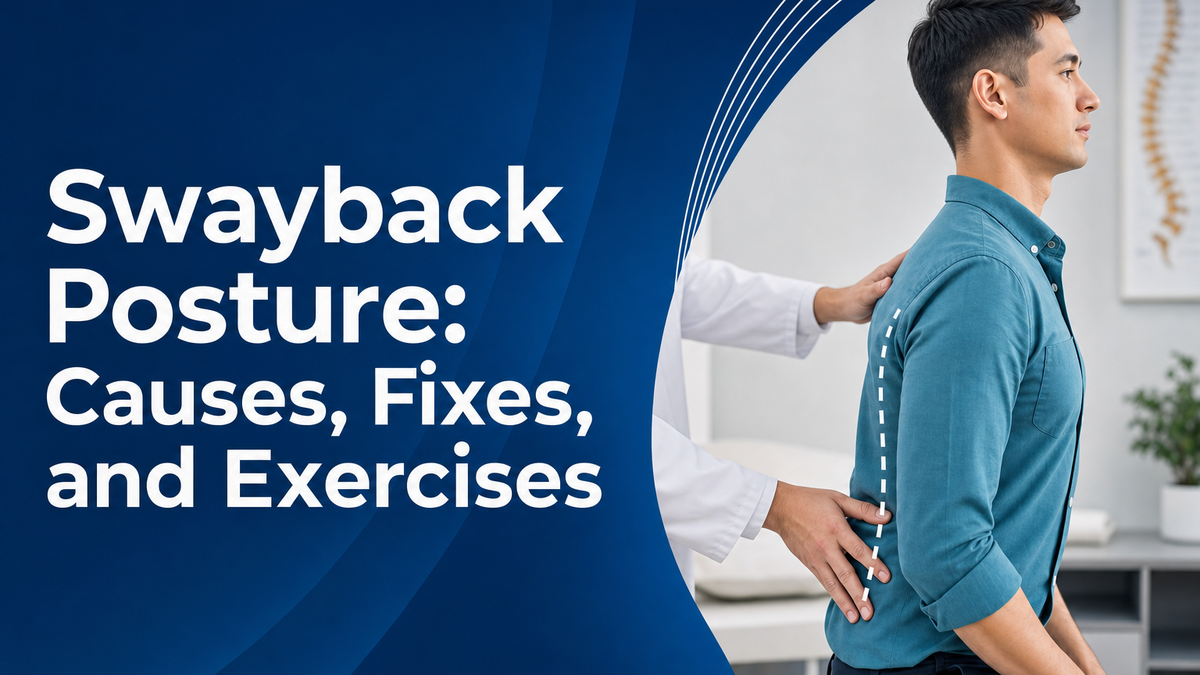
Posture is key to spinal and overall health. The way we hold our bodies during movement, in particular, can shape the spine’s long-term health. The common spinal condition, hyperlordosis, is often referred to as swayback due to the postural changes it’s known for.
Swayback posture refers to a postural misalignment involving the hips shifting forward excessively and the pelvis tilting back. Common causes include tight hamstrings and back muscles, a weak core, ligament laxity in the lower back and pelvis, and hyperlordosis.
Proper posture is shaped by a number of factors, and disruptions to posture can have a number of causes from poor muscle health to an underlying spinal condition.
The Importance of Healthy Posture
Few of us have perfect posture, but with awareness, proper posture can be maintained for healthy spinal alignment, muscles, and movement patterns.
The body has to support itself despite the downward pull of gravity, and healthy posture involves an aligned spine, supportive muscles and ligaments, and healthy lifestyle factors.
Healthy posture aligns the head over the torso, the shoulders with the hips, the torso over the pelvis, and the pelvis should be aligned to shape hip position and lower body movement and health. The hips should be aligned with the feet for a supportive foundation.
The back and abdominal muscles support and stabilize the spine and pelvis.
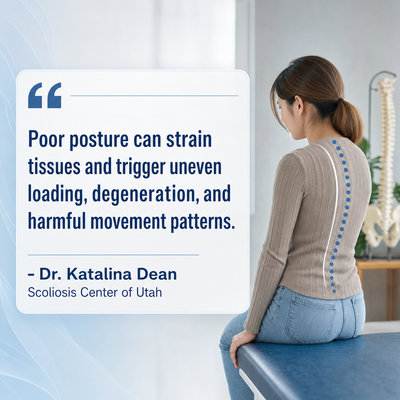 Poor posture can cause muscle/ligament strain and unhealthy movement patterns capable of initiating a damaging cycle of asymmetric loading and degenerative changes in the spine and body.
Swayback Posture
Swayback posture involves the abdomen protruding excessively and giving the body a swayback appearance.
When the hips shift forward and the pelvis tilts backward, it causes the lumbar spine to straighten out, losing its natural lordosis.
Effects of Swayback Posture
When the spine loses a healthy curve, the body compensates in a number of ways, and if the lumbar spine flattens out, a forward-rounding of the upper back and shoulders can develop, causing a slouching appearance.
If the lumbar spine loses its healthy curve, forward head posture is a common effect as head posture shifts forward. A primary role of the cervical spine (neck) is to support the weight of the head and a wide range of motion. If the head shifts forward, the weight of the head on the neck increases significantly, causing strain and stiffness.
Headaches, upper back, and shoulder pain can accompany forward head posture.
In some cases, hyperextended knees can develop as the knees shift forward in an attempt to maintain balance.
Due to the uneven distribution of body weight caused by asymmetrical posture, pain in the lower back, hip, and neck are common.
Due to compression, tingling and/or numbness can develop in the legs, along with weakness.
Tight hamstrings, hip flexors, and chest muscles are common, and weak muscles in the back and glutes are also common.
Primary Swayback Posture Causes
Swayback posture can have different causes, including muscular imbalance, lifestyle factors, and the presence of an underlying spinal condition.
The spine relies on different muscle groups working together to maintain its alignment and balance; if muscles are unbalanced, shifts can occur in the skeleton that disrupt its alignment.
Muscular Imbalance
Tight muscles are over-used, and tight hamstrings, hip rotators, and gluteals are associated with swayback posture.
Weak muscles are under-used; if hip flexors, rotators, and abdominal muscles are stretched and weak due to lack of use, swayback posture can develop.
A muscular imbalance in the pelvis and lower body can involve tight hamstrings pulling on the bottom of the pelvis, causing it to shift down and forward. The lower gluteal and pelvic muscles apply pressure to the pelvis, and if they are overactive, the pelvis is pushed forward ahead of the body’s midline and center of gravity.
A muscular imbalance in the upper body can also exhibit swayback posture. Tight muscles in the upper back, chest, and abdominal area paired with weak back muscles and a lack of core stability can cause the rib cage to compensate by swaying backward to stabilize the body and prevent falls.
The backward pull of the rib cage causes the upper back and shoulders to round forward, and when the body leans too far forward, the torso isn’t evenly aligned over the pelvis, and upper body weight is unevenly distributed over the lower body.
When body weight isn’t evenly distributed over the pelvis, the transfer of mechanics stress during movement isn’t even and down the center of the legs; this contributes to uneconomical movement patterns, uneven loading and degeneration.
Ligament laxicity can also contribute by causing hypermobility in the joints.
Lifestyle Factors
Lifestyle factors including carrying excess weight, too little exercise, and chronic poor posture can cause the development of swayback posture.
Carrying excess weight strains the spine, its surrounding muscles, and supportive ligaments, doesn’t support proper posture, and pulls the pelvis forward.
Too little exercise can contribute to a weak core and back for a lack of support and stability, as can too much time spent sitting.
Chronic poor posture like constant slouching and pushing the hips forward while standing can also cause swayback posture.
Hyperlordosis
Lordosis is the spinal curve type that’s found in the cervical and lumbar spinal sections, and it causes the spine to curve forward.
There can be a healthy range of lordosis, but if a person’s lordosis becomes excessive and over-pronounced, it can become problematic.
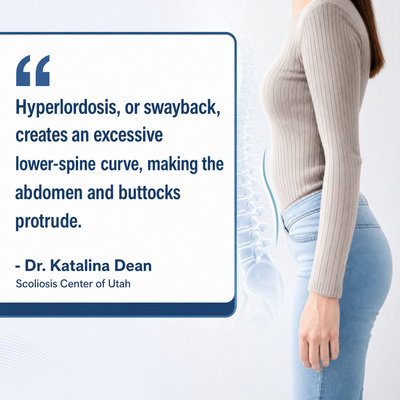 Hyperlordosis of the lumbar spine is commonly referred to as swayback due to the visual changes it causes; because of the lower spine’s excessive forward curve, the buttocks and abdomen protrude excessively.
Swayback Fixes
To correct swayback posture, the first step is determining its underlying cause so it can be addressed accordingly.
Postural restoration and muscle strengthening and balancing is necessary.
Improvements to posture can be made through lifestyle guidance, physical therapy, and targeted exercise.
Improving muscle strength and balance is key with a focus on strengthening the middle back, glutes, and lower abdominal muscles.
Stretching tight muscles can lengthen hamstrings, chest muscles, and hip flexors for more uniform support.
Physical therapy and targeted exercise can re-educate muscles, improve the body’s alignment, range of motion, and re-establish its center of gravity.
When swayback posture is caused by a structural misalignment in the spine (hyperlordosis), a combination of treatments is necessary: condition-specific chiropractic care (Chiropractic BioPhysics®), physical therapy, and targeted exercise plans.
Exercises to help swayback posture focus on correcting muscular imbalance that disrupts the alignment of the pelvis and lumbar spine.
Stretching tight overused muscles (chest muscles and hip flexors) and strengthening weak underused muscles (upper back, abdominal, and glutes) balances muscles so they can work together.
When important muscle groups are strong and balcaned, they facilitate the body’s natural, neutral, and healthy alignment.
The key to healthy posture is an aligned spine and strong balanced muscles.
Conclusion
Poor posture can cause a host of health problems: chronic pain, poor nervous system health, limited range of motion, disruptions to organ health, and more.
Chronic poor posture shapes spinal health over time, and a misaligned spine can cause a misaligned body from the head to the feet.
Swayback posture develops if the hips shift too far forward and the pelvis shifts back, and common causes include muscular issues, lifestyle factors, and hyperlordosis.
If muscles are weak and unbalanced, they aren’t supporting and stabilizing the spine, and can disrupt healthy posture, and certain lifestyle factors such as carrying excess weight, a sedentary lifestyle, and chronic poor posture can contribute over time.
Lifestyle guidance and postural awareness are key. Mindful movement is part of physical therapy that educates patients on how to recognize and correct poor postural habits, while stretching tight overused muscles and lengthening and strengthening weak underused muscles.
If the lumbar spine’s structural misalignment is the cause, its position needs to be improved through condition-specific chiropractic care, physical therapy, postural correction, and targeted exercise.
If the body is held in a straight alignment during rest and movement, the onset of degenerative changes can be slowed and/or prevented; it’s important to understand that postural collapse is a leading cause of disability in older adults.
Here at the Scoliosis Center of Utah, proper posture is prioritized and corrected to preserve the body’s optimal alignment and health, but early intervention is key, before poor postural habits become well-established and initiate a damaging cycle of degeneration.

Dr. Katalina Dean
Dr. Katalina Dean is the founder and clinical director of Scoliosis Center of Utah, in Midvale, UT. Her team specializes in posture correction, spinal rehabilitation, and non-invasive scoliosis care and bracing.
Call Today
Do You Qualify for Care?
Schedule an Appointment Below