
Blogs
Types of Scoliosis: Symptoms and Treatment Options
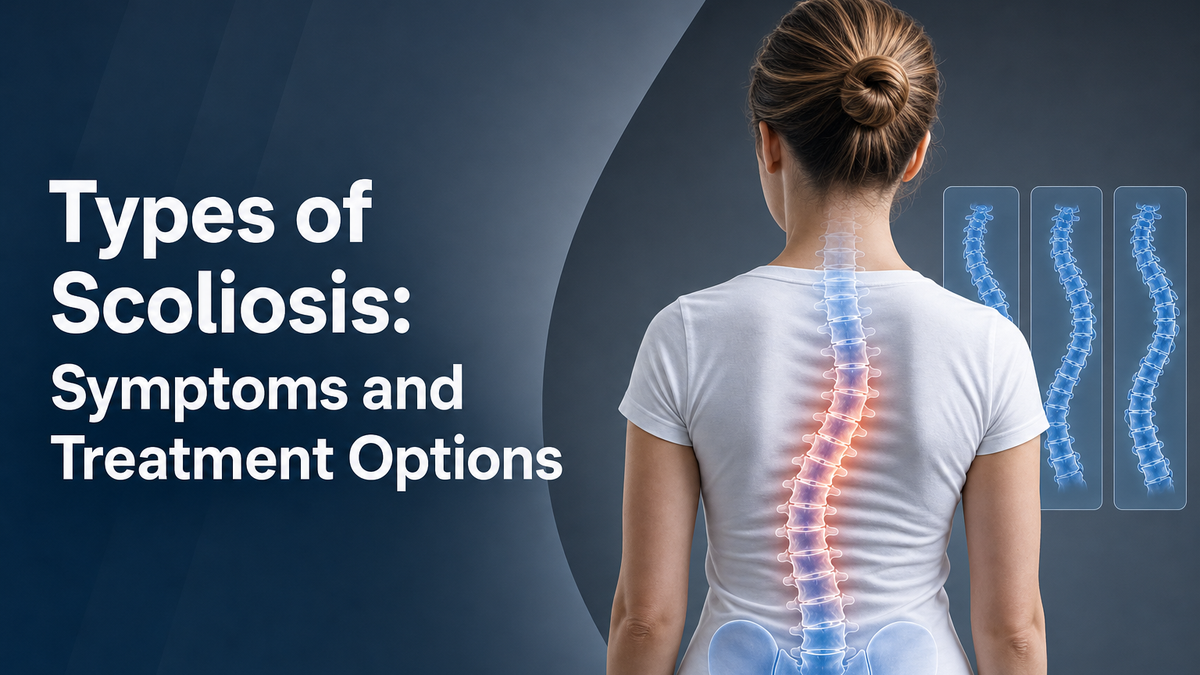
Scoliosis affects infants, juveniles, adolescents, and adults. Scoliosis type is determined by causation, and when it comes to treatment needs, the underlying cause of scoliosis has to be impacted for long-term symptom relief.
Scoliosis is a complex spinal condition that causes an unnatural lateral spinal curve to develop, with rotation; it affects all ages and the main types include idiopathic scoliosis, neuromuscular scoliosis, and degenerative scoliosis.
There are a number of factors that shape a patient’s scoliosis treatment plan; an individualized approach is necessary.
Idiopathic Scoliosis
Idiopathic scoliosis is the most common type of scoliosis to affect all ages and has no single-known cause.
While idiopathic scoliosis has no single-known cause, it’s generally considered to be multifactorial: caused by a number of variables, or the way certain variables combine.
The majority of scoliosis cases involve idiopathic scoliosis, and while we don’t fully understand what triggers their initial onset, we know how to respond with treatment.
It can be hard for patients recently diagnosed to hear there’s no known cause for their condition, but knowing the cause wouldn’t necessarily change the course, or outcome, of treatment.
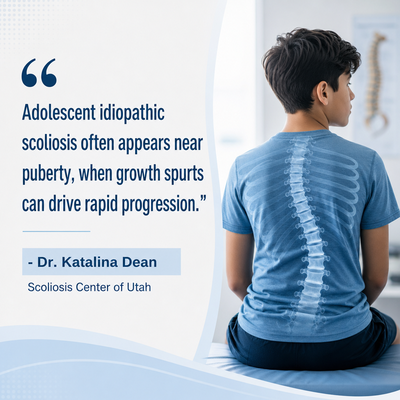 The most prevalent type of scoliosis overall is adolescent idiopathic scoliosis diagnosed around the onset of puberty, and this age group is at risk for rapid curve progression due to the unpredictable nature of growth spurts during puberty.
Symptoms of adolescent idiopathic scoliosis include postural changes such as uneven shoulders, hips, shoulder blades, rib flaring, and changes to mobility.
Scoliosis changes how a person walks, but postural changes are the most overt.
Adolescent Idiopathic Treatment
Treatment for adolescent idiopathic scoliosis needs to be proactive during periods of rapid growth, and most treatment plans combine the potential of scoliosis-specific exercise and corrective 3D bracing.
Treatment focuses on improving the spine’s alignment, improving posture, and increasing core and back muscle strength for more support and stability for the spine.
Idiopathic Scoliosis in Adults
Idiopathic scoliosis is also the main type to affect adults, and in most of these cases, the scoliosis is pre-existing from adolescence; mild cases of childhood scoliosis can be difficult to notice, and it’s not uncommon for adolescent scoliosis to go unnoticed and Untreated until skeletal maturity is reached.
Idiopathic scoliosis that’s pre-existing in adulthood highlights the importance of early detection. By the time these patients receive a diagnosis and treatment, they’ve had their scoliosis for years, significant progression has already occurred, and symptoms have increased making the condition more noticeable.
Adults also experience postural changes, but due to compression starting when skeletal maturity is reached, back and nerve pain are the main scoliosis symptoms in adults.
Scoliosis becomes compressive once I growth stops. Compression isn’t the only cause of scoliosis pain, but uneven pressure on the spine, its surrounding muscles, ligaments, and spinal nerves is a primary cause.
Nerve pain that radiates into the extremities is a primary symptom of adult scoliosis.
Idiopathic Scoliosis in Adulthood Treatment
Treatment for idiopathic scoliosis in adults combines the potential of scoliosis-specific exercise to improve the spine’s surrounding muscle balance and strength and improve posture. Bracing can help with short-term pain relief, increasing stability, and retraining the brain-body connection to maintain the torso’s straight and upright alignment when out of the brace.
Scoliosis-specific chiropractic adjustments target the most misaligned vertebrae to improve the structural nature of scoliosis.
Idiopathic scoliosis has no known cause but is considered typical and can be highly treatable, particularly with early detection and proactive treatment; typical types of scoliosis with known causes can pose unique treatment challenges.
Neuromuscular Scoliosis
Neuromuscular scoliosis is caused by an underlying neuromuscular condition such as spina bifida, muscular dystrophy, or cerebral palsy.
The neuromuscular condition causes a disruption in communication between the brain, the spine, its surrounding muscles and ligaments, and the scoliosis develops as a secondary complication.
These cases can be extreme, with some patients needing walking assists such as a walker, or wheelchair; some patients become nonambulatory.
Not all neuromuscular conditions cause scoliosis, but it is a common complication, and treatment plans focus on the larger neuromuscular condition.
Degenerative De Novo Scoliosis
Degenerative de novo scoliosis develops later in life, and unlike idiopathic scoliosis in adults, with no prior history.
Because degenerative scoliosis is caused by degenerative instability, it’s almost always painful and progressive.
Lower back pain is common as the lumbar spine is the most common spinal section affected.
The lumbar spine is load-bearing and feels the effects of strenuous movement, and because the lumbar spine connects directly to the pelvis, lower spine health impacts the alignment and balance of the pelvis and hips.
Degenerative instability can be triggered by the cumulative effect of certain lifestyle factors such as carrying excess weight, low activity level, poor posture, and repeated strain.
As we age, muscles and ligaments can stretch and weaken, contributing to postural changes that introduce uneven forces to the spine and its surroundings.
Leaning too far to the side or too far forward can, over time, initiate a cycle of asymmetric loading, wear, and degeneration.
The spine’s discs and facet joints are vulnerable to uneven pressure and friction during movement, and if poor posture is left unaddressed, the cycle can become more established and damaging.
If the spine loses stability due to a disc becoming desiccated and changing shape and/or facet joints that connect vertebrae losing cartilage and wearing out quickly and unevenly, there can be too much movement within the spine, and patients are at risk of injury through a fall.
A loss of balance and coordination are common effects of degenerative scoliosis, along with postural changes, and lower back pain.
Degenerative Scoliosis Treatment Options
A misaligned body can’t support an aligned spine, and a misaligned spine can’t support an aligned body; postural health and spinal health are interdependent.
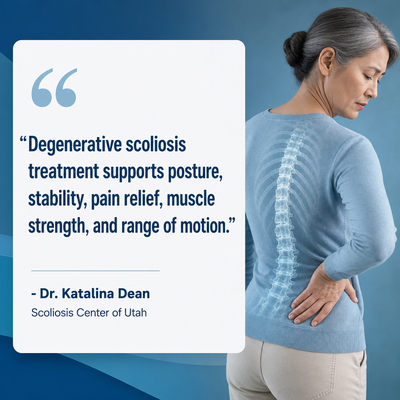 Treatment for degenerative scoliosis focuses on improving posture so the spine is held in a straight and neutral alignment, restoring balance for stability and fall prevention, pain relief, and improving muscular support and range of motion.
When it comes to treating adult scoliosis, flexibility of the curve is a determining factor. As progression occurs, the spinet’s unnatural curve and rotation are increasing, and the spine is becoming increasingly rigid. A rigid spine is less responsive to treatment, causing disruptions to a patient’s flexibility, range of motion, back and muscle pain.
Through postural awareness and restoration, spinal health can be improved, and while treatment plans are fully individualized, degenerative scoliosis treatment often combines the potential of a scoliosis-specific exercise program, bracing, and Chiropractic BioPhysics®.
Through scoliosis-specific exercise, the spine’s surrounding muscle strength and balance can be improved, the spine’s flexibility can be increased, posture can be corrected, and curve reductions can be worked towards.
Increasing the spine’s surrounding muscle strength means more support and stability,and targeted exercise can counteract any muscular imbalance for uniform support.
Increasing the spine’s flexibility improves range of motion, treatment responsiveness, and pain.
A strong core and back supports healthy posture, and the use of Mirror Image® exercise is key to teaching postural awareness so patients learn to recognize poor posture, correct it, and sustain the corrections during daily activity.
Conclusion
The main types of scoliosis include idiopathic scoliosis, neuromuscular scoliosis, and degenerative scoliosis.
Adolescent idiopathic scoliosis is the most prevalent type of scoliosis overall and needs to be treated proactively because rapid growth is occurring.
Idiopathic scoliosis is the most common type of scoliosis to affect adults, and most cases are pre-existing from adolescence.
Neuromuscular scoliosis affects both children and adults and tends to be severe because the scoliosis develops as a secondary complication of a larger neuromuscular condition so is atypical.
Degenerative de novo scoliosis develops later in life and is caused by degenerative changes to spinal health.
Postural collapse is a common effect of scoliosis, and a primary contributing factor in the development of degenerative scoliosis over time by initiating a cycle of poor posture, asymmetric loading, wear, and degeneration.
Regardless of the type of scoliosis, or its severity, all types of scoliosis can benefit from treatment; its progressive nature makes how scoliosis is managed during periods of rapid growth and degenerative changes to spinal health crucial.
When scoliosis is treated proactively, it can be highly responsive, and a successful treatment outcome means improving the spine’s structural misalignment, 3D body posture, back and core muscle strength and balance for optimal spinal support, and symptom relief.
Even incremental improvements to the spine’s alignment can benefit the spine and body’s overall health, and the best place to start is posture. The way we hold our bodies during daily activity can, over time, shape the types of forces the spine and body experience.
Long-term health and quality of life are shaped by the spine and body’s alignment.
Dr. Katalina Dean
Dr. Katalina Dean is the founder and clinical director of Scoliosis Center of Utah, in Midvale, UT. Her team specializes in posture correction, spinal rehabilitation, and non-invasive scoliosis care and bracing.
Call Today
Do You Qualify for Care?
Schedule an Appointment Below