
Blogs
Physical Therapy and Scoliosis: What You Should Know
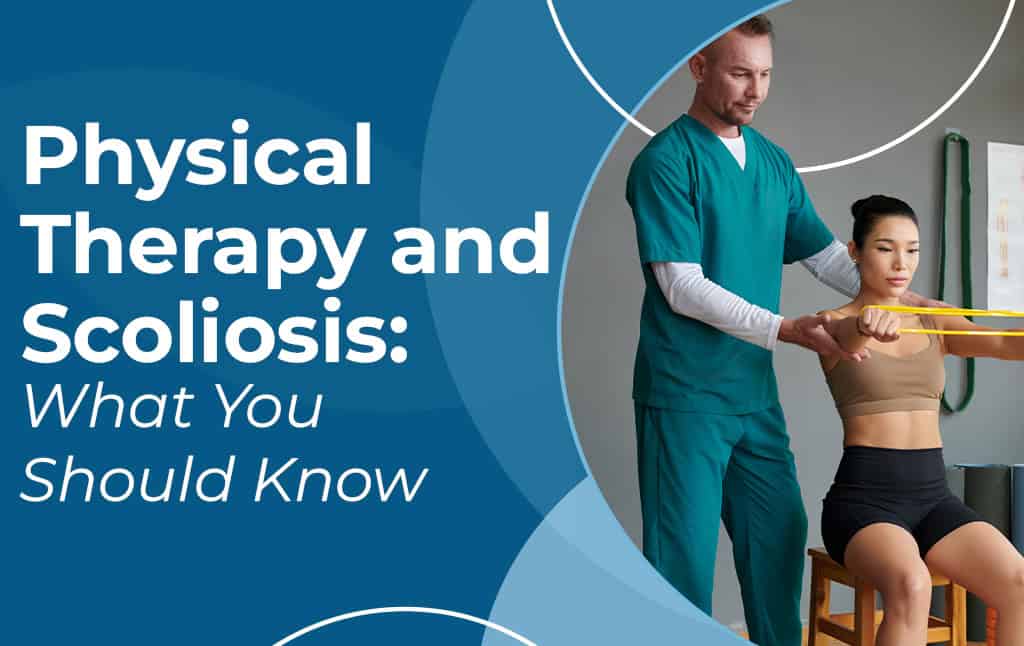
Scoliosis is a progressive spinal condition capable of affecting all ages, but it can be highly treatable. Physical therapy for scoliosis is a key nonsurgical treatment discipline that works towards increasing the strength and balance of the spine’s surrounding muscles while improving spinal flexibility and posture.
What you should know about physical therapy and scoliosis is that as a potentially-effective treatment option, physical therapy has to be scoliosis-specific and combined with other key facets of nonsurgical scoliosis treatment.
When it comes to scoliosis treatment, including physical therapy, the sooner it’s started, the better.
Scoliosis and Progression
Scoliosis treatment has changed a lot over the years. For a long time, traditional spinal fusion was the dominant choice, but invasive spinal surgery can be risky and can negatively affect the spine’s long-term health.
Conservative non surgical treatment options are proven and effective, and while there are no treatment guarantees, we know that early detection and intervention increases potential treatment success.
We also know that the progressive nature of scoliosis makes most cases get worse over time, and as progression is occurring, not only is the spine’s unnatural curve and twist increasing, the condition’s effects are also becoming more overt and well established.
While we don’t know why most cases of scoliosis develop initially, we do know it’s growth that triggers progression, so children have the most potential progression to face due to rapid and unpredictable growth spurts, and the most to gain from early detection.
When scoliosis is diagnosed early, while it’s still mild, and treatment is started early, the opportunity to work towards preventing progression, increasing effects, and the need for invasive surgery is there.
The most important scoliosis variable to understand is its progressive nature; even those diagnosed as mild can easily progress to become moderate or severe, and the more severe cases are more complex to treat.
The effects of scoliosis can change over time, and when it comes to minimizing the potential effects and complications of scoliosis, a proactive customized treatment plan has a lot to offer.
As a complex 3-dimensional progressive spinal condition, scoliosis treatment needs to be integrative, combining the power of multiple treatment disciplines apportioned accordingly, one of which is physical therapy.
Scoliosis-Specific Physical Therapy
There was a time when the place of exercise in the lives and treatment of scoliosis patients was questioned, but we now know that scoliosis can respond to exercise-based treatment when it’s scoliosis-specific and part of a proactive and complete treatment plan.
The best time to treat scoliosis is always now, and when it comes to scoliosis-specific corrective exercises, these are different from general physical therapy.
 While a general physical therapist can treat someone with scoliosis, this focuses more on symptom management, while a scoliosis-specific physical therapist who’s trained in multiple exercise-based treatment approaches can address the scoliosis itself.
Approaches such as the Schroth method and SEAS (Scientific Exercise Approach to Scoliosis) have proven effectiveness, particularly when started early and combined with other facets of treatment.
The Schroth method is the most widely-used physical therapy approach for scoliosis and focuses on the potential of 3-dimensional corrective exercises custom designed to counteract the spine’s unnatural curve and rotation.
Corrective exercises are prescribed to elongate and de-rotate the spine by improving the body’s symmetry, postural awareness, and teaching corrective breathing techniques.
So the Schroth method offers 3-dimensional correction, rotational angular breathing techniques, postural awareness, and improvements to muscle strength, endurance, and balance.
SEAS combines the power of multiple exercise-based approaches to improve posture, reduce curves, and slow/stop progression.
ScoliBalance® Therapy
Here at the Scoliosis Center of Utah, patients benefit from the integration of multiple scoliosis-specific treatments such as Chiropractic BioPhysics, corrective bracing, and scoliosis-specific physical therapy.
ScoliBalance® is a complete program involving the collaboration of physical therapists, chiropractors, and therapists working towards a common goal: scoliosis correction.
 ScoliBalance® uses Mirror Image® exercises to facilitate postural restoration through postural awareness; patients are taught specific exercises to counteract their curve that can be performed from home as part of an ongoing rehabilitation program.
ScoliBalance® therapy can improve spinal health and muscle health, and a focus of scoliosis-specific treatment is improving the strength and balance of the spine’s surrounding muscles.
Although scoliosis is a spinal condition, it affects the spine’s surroundings, and ultimately, the entire body.
The spine needs support and stability from its surrounding muscles, and as a common effect of scoliosis is a muscular imbalance, physical therapy targets weak and unbalanced muscles for improved spinal support.
If the spine’s surrounding muscles are stronger on one side, this can exacerbate the condition’s effects and contribute to worsening of the curve, but a scoliosis-specific physical therapist can custom design exercises that strengthen the weaker side and relax the tight overused muscles, which can also provide pain relief.
Scoliosis-specific physical therapy can also work towards increasing the spine’s flexibility, making it more responsive to treatment, and when combined with the power of corrective bracing, there are fewer limits to what nonsurgical treatment can achieve.
ScoliBrace®
As a complex structural spinal condition, scoliosis needs to be treated proactively, and it also needs the power of multiple types of treatment to impact conditions on every level for sustainable long-term corrective treatment results.
Scoliosis bracing is at the center of nonsurgical scoliosis treatment, particularly when it comes to flexible childhood scoliosis curves that are more malleable and can be highly responsive to bracing.
An orthotic scoliosis brace is worn snugly around the torso to improve the spine’s position and alignment, and as the ScoliBrace® is modern, it’s designed with exercise in mind so complements the ScoliBalance® program for more positive results.
Conclusion
When it comes to physical therapy for scoliosis, what you should know is that there is a big difference between general physical therapy and scoliosis-specific physical therapy, and as a progressive condition triggered by growth, the best time to start treatment is always now.
The sooner treatment is started, the more potential there is for nonsurgical treatment success, and when it comes to the long-term effectiveness of scoliosis treatment, correction through conservative treatment is less invasive than traditional spinal fusion surgery.
While no exercise alone can impact scoliosis on multiple levels the way it needs to be, when physical therapy is scoliosis-specific and combined with the power of additional treatments, it can offer corrective potential.
The potential benefits of a scoliosis-specific physical therapy program include increasing spinal flexibility for treatment responsiveness and pain relief, reducing curve size, slowing/stopping progression, increasing the spine’s surrounding muscle strength and balance, and postural improvement.
A spine that’s surrounded by strong and balanced muscles is one that doesn’t have to work as hard to maintain its straight and neutral alignment, and a strong core can support healthy posture and movement patterns.
Here at the Center, treatment plans are nonsurgical, proactive, and customized, so if you, or someone you care about, has been diagnosed or is in need of assessment, don’t hesitate to start the process; the sooner treatment is started, the easier it can be to treat.
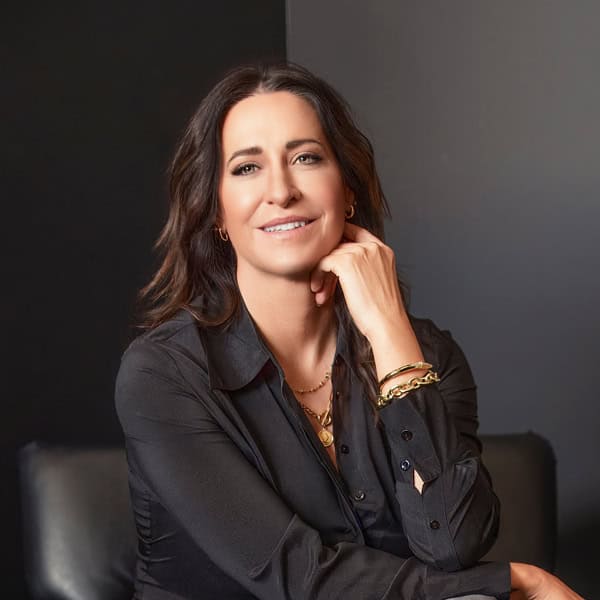
Dr. Katalina Dean
Dr. Katalina Dean is the founder and clinical director of Scoliosis Center of Utah, in Midvale, UT. Her team specializes in posture correction, spinal rehabilitation, and non-invasive scoliosis care and bracing.
Call Today
Do You Qualify for Care?
Schedule an Appointment Below