
Blogs
Is Scoliosis a Disability? What to Know
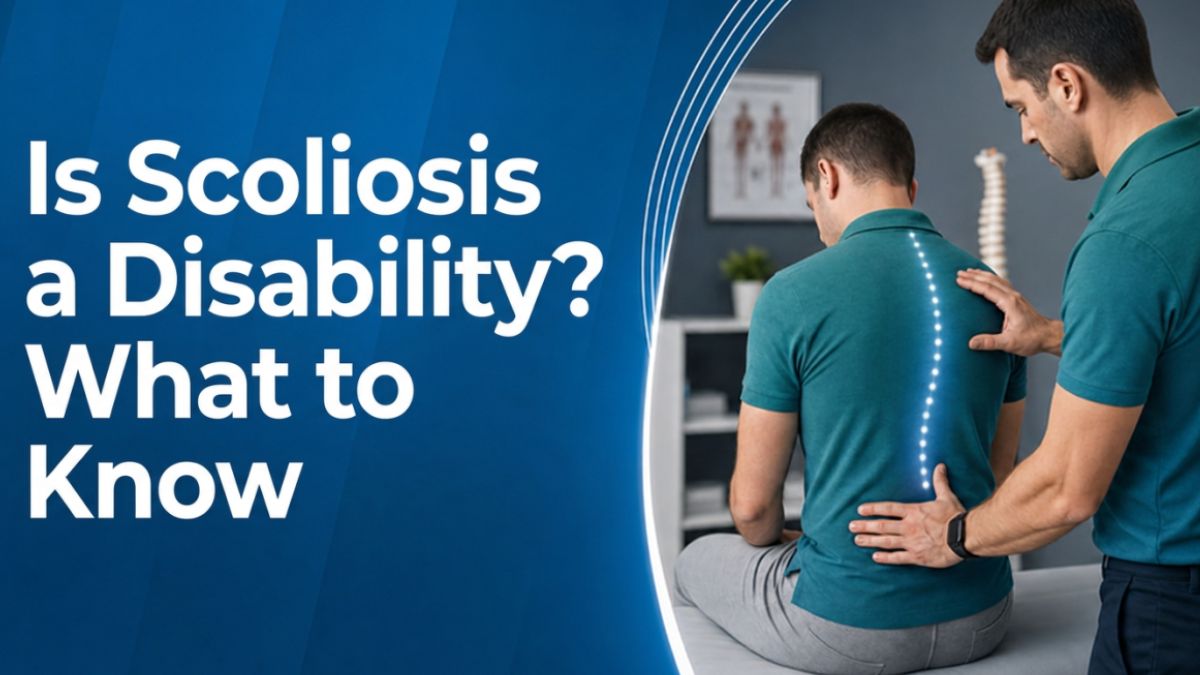
For a health condition to be considered a disability, it’s long-term, progressive, and/or involves significant limitations. Living with a disability can make people more dependent on others by disrupting movement, appearance, physical and mental health.
Scoliosis is a structural spinal condition capable of causing widespread effects, particularly when severe, left untreated, and/or when it develops later in life; however, when treated proactively, scoliosis can be highly treatable.
Scoliosis Effects
Scoliosis causes the spine to bend unnaturally to the side and rotate, and the spine’s sideways curvature causes adverse spinal tension capable of impacting the spine’s surroundings and overall health in a number of ways.
It’s not always easy to predict the types of symptoms a patient will experience because no two cases are the same; not only can scoliosis vary from mild and subtle to severe and debilitating, there are also different types, and scoliosis affects all age groups.
So the effects of scoliosis are shaped by a number of variables that differ from patient to patient: patient age, progressive rate, scoliosis severity, type, and location.
When it comes to changing symptoms, factors that shape how fast, or slowly, progression occurs, are key, and in children, growth is the main trigger for progression, and in adults, it’s increasing pain
Because scoliosis is a progressive condition, its nature is to become more disruptive over time, so even if the parameters of what’s considered a disability aren’t met at the time of a patient’s diagnosis, there is no guarantee that progression won’t occur and the condition won’t become more disruptive over time; this is particularly true of adult degenerative de-novo scoliosis.
Adult Degenerative Scoliosis
Degenerative scoliosis develops later in life, commonly affecting adults over the age of 50, and while growth is no longer occurring, adult scoliosis cases still progress cumulatively over time, and when age-related spinal degeneration starts, progression can increase.
Once the onset of degenerative changes is initiated, scoliosis progresses an average of 4 degrees a year, which is a significant increase.
As we age, off-balance posture such as leaning too far to one side or too far forward is the main cause of disability as we age, and the loss or collapse of the spine leads to a loss of leg strength, further increasing dependence on others.
Adults with degenerative scoliosis are at risk of injury through a fall, and most degenerative spinal changes start with the intervertebral discs.
As we age, discs can degenerate, and how force is exerted on the spine and its structures is key. When scoliosis is present, uneven pressure is applied to one side of a disc, and if the imbalance isn’t corrected, over time, the uneven load on the spine causes the acceleration of disc degeneration, contributing to instability.
Degenerative Scoliosis Symptoms
Once the degenerative cycle is initiated, it can be difficult to break, and as increasing instability is occurring, almost all cases of degenerative scoliosis are progressive and painful, leading to disability in a number of areas.
Not only are healthy movement patterns and posture disrupted, lower back pain can become debilitating and disrupt quality of life.
Nerve root compression can cause radiating pain felt throughout the body as spinal nerves are exposed to uneven pressure.
The best way to minimize the potential effects and complications of scoliosis is to treat it proactively. However, the reality is that all adults will experience degenerative changes and face varying degrees of disability; the severity of the disability is shaped by whether or not earlier prevention took place.
Treatment started at age 50 is a different process than when it’s started at 70. With early effective treatment, degeneration can be prevented to prevent disability.
Cases of neuromuscular scoliosis can be particularly severe because the scoliosis develops as a complication of another condition.
Neuromuscular Scoliosis
For most patients, a scoliosis diagnosis involves idiopathic scoliosis (cause unknown) or degenerative de novo scoliosis; combined, these types account for approximately 80 percent of known cases.
Neuromuscular scoliosis is considered atypical and has a known cause: the presence of a larger neuromuscular disease such as spina bifida, cerebral palsy, or muscular dystrophy.
Neuromuscular conditions cause an interruption in the communication between the brain, the spine, and its supportive muscles and structures, and these cases tend to be more severe and debilitating because the scoliosis develops as a secondary complication.
Not all patients with a neuromuscular condition will develop scoliosis, but it is a common complication that warrants awareness, and because progression can happen quickly, severe scoliosis symptoms can develop, with some patients becoming fully dependant on a wheelchair, walking aid, and/or others for support with daily life.
Scoliosis Treatment
Scoliosis treatment is shaped around a number of patient variables including patient age, progressive rate, scoliosis type, severity, posture and curve location.
If the body and spine are held in a straight alignment during movement and daily activity, this helps counteract the unnatural spinal curve and related postural changes, and ScoliBalance® teaches postural awareness and works towards corrective treatment results.
The customization of scoliosis-specific rehabilitative exercise is the key to nonsurgical scoliosis treatment that works towards improving the spine’s surrounding muscle strength and balance, and Mirror Image® exercise is a powerful tool for teaching patients the importance of healthy posture.
When combined with the potential of Chiropractic BioPhysics® and corrective 3-dimensional bracing, the potential of nonsurgical scoliosis treatment widens.
Patients who are treating their scoliosis proactively are managing its effects. Scoliosis symptoms can be minimized through addressing their underlying cause: the structural nature of scoliosis.
Through improvements to the spine’s position, body posture, and increasing support and stability from the spine’s surrounding muscles, scoliosis may be corrected, and scoliosis corrections are sustained through ongoing physical therapy and postural awareness.
Scoliosis can be a disability to some, particularly to those whose conditions are severe, atypical, and/or are left untreated.
When it comes to disability benefits, the application process involves providing medical evidence and documentation about the details of a patient’s scoliosis, its effects, how it affects daily life and ability to work, and a current medical examination is commonly required.
Whether or not a patient is approved by the social security administration to receive scoliosis disability benefits is case-specific.
Conclusion
Scoliosis is a progressive spinal condition, but it can be highly responsive to proactive treatment, and when progression is prevented, the effects of scoliosis are managed and minimized.
Here at the Scoliosis Center of Utah, patients receive a comprehensive initial assessment that determines the course of treatment.
The more specific a treatment plan is, the more potential there is for customized correction. Through the application of nonsurgical treatment that combines scoliosis-specific physical therapy, postural correction, corrective bracing, and Chiropractic BioPhysics®, the spine’s balance and stability can be restored for a better quality of life.
Scoliosis is a highly-variable condition, and while there are never treatment guarantees, particularly with early detection and a proactive treatment plan, the condition can be managed effectively, symptoms reduced, stability increased, and progression prevented.
Scoliosis patients can lead fulfilling lives without limitations to their potential, particularly when conditions are diagnosed early and treated proactively.
In cases of severe scoliosis with limitations, patients may be approved for social security disability benefits, but these determinations are case-specific.
Dr. Katalina Dean
Dr. Katalina Dean is the founder and clinical director of Scoliosis Center of Utah, in Midvale, UT. Her team specializes in posture correction, spinal rehabilitation, and non-invasive scoliosis care and bracing.
Call Today
Do You Qualify for Care?
Schedule an Appointment Below