
Blogs
Improper Posture and Back Pain: Causes & Fixes
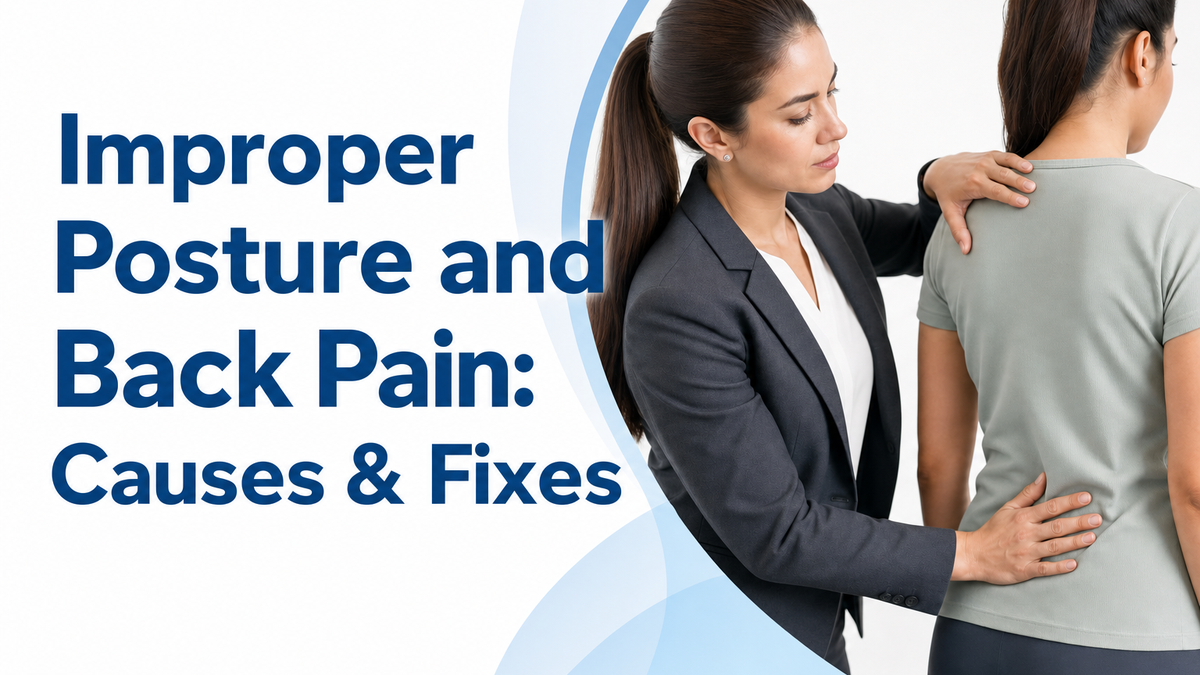
Healthy posture is needed to maintain the body and spine’s balance and stability. Poor posture contributes to unhealthy movement patterns and uneven wear and tear on the spine, its surrounding muscles, joints, and the entire body. Addressing postural issues can improve back pain and function.
Everyone will experience lower back pain at some point in life. In many cases, poor posture is the underlying cause of back pain. Postural health and spinal health shape one another; the way the body is held during rest and movement shapes the spine’s alignment, and the spine’s alignment facilitates the straight and upright position of the torso.
Back pain is a symptom of an underlying issue, and a postural assessment can tell me a lot about the health of a patient’s spine.
Poor Posture
Poor posture is the root cause for a number of issues, lower back pain being a primary complaint. We shape the forces exerted on the body through how it’s positioned during movement and rest.
Postural health and spinal health can’t be separated; improvements to one will always benefit the other.
One of the main reasons people come into the Scoliosis Center of Utah is to improve back pain and quality of life.
When posture and alignment is poor, it strains the spine, causing pain and uneven wear on individual structures such as the intervertebral discs and joints.
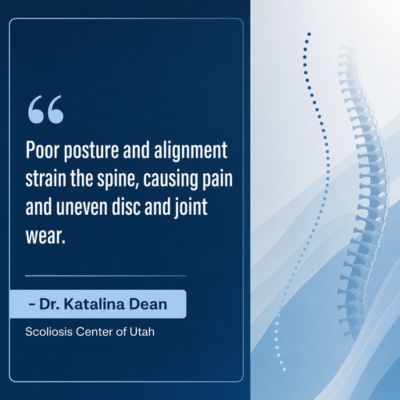 When the spine and body are misaligned, there is uneven pressure on the discs and joints of the spine, and uneven loading and distribution of body weight means uneven wear and tear as a result, and as long as the imbalance is occurring, the cycle of poor posture and degenerative changes will increase; early intervention is key.
Recognizing the occurrence and effects of poor posture early is important for preventing the onset of spinal degeneration. Postural decline is a primary cause of disability and back pain in aging adults.
Lower back pain is a sign that adverse stress is affecting the spine, and over time, the residual damage happening to discs and joints increases pain and disability.
Nerve Pain and Posture
Nerves can also be affected by poor posture and adverse spinal tension, and nerve pain can be debilitating.
The spinal cord contains 31 pairs of spinal nerves, and if the spinal cord and/or nerve roots, where they exit the spine, are exposed to uneven pressure, they can become irritated, inflamed, and cause radiating pain throughout the body.
A primary role of the spine is to protect the spinal cord for central nervous system health, and if the spine is misaligned, nerve involvement can cause a number of symptoms, including back pain.
Sciatic nerve pain, for example, is a common complication of scoliosis. Scoliosis causes the spine to develop an unnatural lateral curve with rotation, and a primary effect of scoliosis is poor posture. If scoliosis develops in the lumbar spine, where the sciatic nerve starts, it can compress the sciatic nerve and cause pain and discomfort felt in the lower back and throughout the lower body.
Part of sciatica treatment is on taking pressure on the sciatic nerve by improving posture and spinal support.
Gravity and Posture
Over time, it becomes increasingly difficult for the body to resist the downward pull of gravity, and of course, there are additional stressors occurring during daily life: moving, lifting, shock absorption, injuries, and a number of lifestyle factors such as weight and activity level can further shape spinal health over time.
The biomechanics of the spine are affected by the forces exerted on the spine, and gravity’s downward pull paired with poor posture and the cumulative effect of certain lifestyle factors can initial the onset of degenerative changes in the spine.
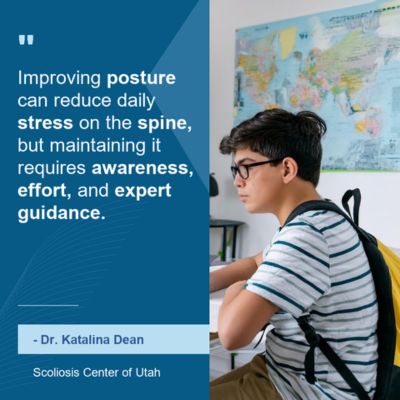 Postural improvement can help counteract the effects of gravity and other daily stressors over time, but it takes awareness and effort to maintain good posture; a posture correction expert can help.
A postural correction expert will comprehensively assess strength, mobility, and posture to determine the underlying cause of pain and the area of the spine, and which structures are affected.
So if a patient’s posture is causing back pain, what types of treatments are available?
Treatment for Posture-Related Back Pain
When back pain is related to a misaligned spine, corrective exercise alone might not be enough, and if left untreated, poor posture can lead to organ issues, spinal disc degeneration, back and neck pain, headaches, migraines, increasing disability, fatigue, and chronic pain.
So what can be done about poor posture that’s developed over time? Determining the underlying cause of poor posture is the first step. There are a number of treatments of options that work together towards a common goal: improving the spine and body’s alignment.
Chiropractic care is the first line of treatment for a number of back complaints, including mobility issues and back pain. Chiropractic BioPhysics® combines proven scientific principles with the most recent chiropractic principles and techniques to improve the spine’s alignment and balance.
A CBP treatment plan involves comprehensive scientific assessment of a patient’s posture, spinal health, notable deficits, and customizes a treatment plan accordingly.
CBP techniques can include routine manual adjustments, Mirror Image® exercise, and spinal remodeling. Correcting lifting posture, standing posture, and posture during movement is at the heart of Chiropractic BioPhysics®.
Specific targeted custom exercise can be applied to educate muscles, and 3D bracing can further help to improve the spine’s structural alignment and balance.
The cosmetic and physiological benefits of postural restoration can’t be understated, and as healthy movement patterns are supported by proper posture, balance and coordination can also be improved for a more active lifestyle and better overall quality of life.
Conclusion
Remember, maintaining proper posture isn’t just about looking good; it’s about supporting healthy movement patterns, spinal health, central nervous system health, and preventing injury, uneven wear and tear on the spine, joints, and the body in general.
Improper posture is a leading cause of back pain, and over time, chronic poor posture can contribute to the development of a number of spinal conditions, injuries, and general health complaints. In addition, poor posture also introduces uneven forces to the spine and body, often triggering the onset of degenerative changes in the spine.
Once the spinal joints and discs are being exposed to uneven pressure, if the problem isn’t addressed, degeneration can increase over time, causing increasing instability in the spine, and particularly for older adults, increasing the risk of injury from a fall.
A balanced and aligned body and spine are healthier and more functional, and the good news is that there are a number of ways to improve a patient’s posture for long-term improvements to spinal health and function.
From lifestyle guidance to the practice of Chiropractic BioPhysics®, the application of corrective Mirror Image® exercise and 3D bracing, a variety of treatment modalities can work together to improve the spine’s 3D position and alignment, along with the body’s 3D posture and alignment.

Dr. Katalina Dean
Dr. Katalina Dean is the founder and clinical director of Scoliosis Center of Utah, in Midvale, UT. Her team specializes in posture correction, spinal rehabilitation, and non-invasive scoliosis care and bracing.
Call Today
Do You Qualify for Care?
Schedule an Appointment Below