
Blogs
How to Know If You Have Scoliosis: Key Warning Signs
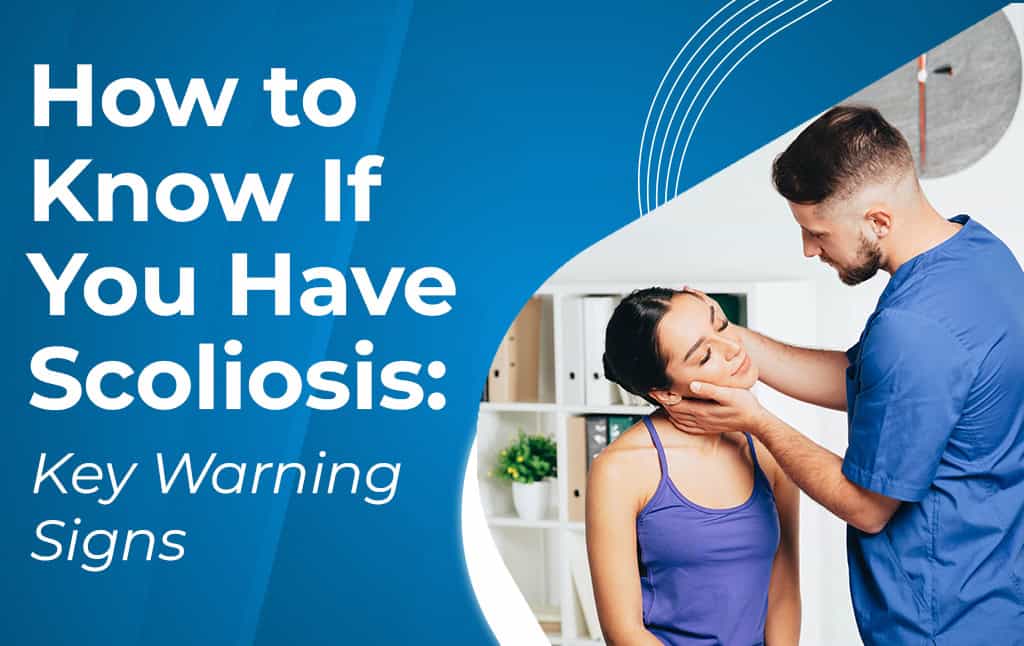
The only way to know if a person has scoliosis or not is to seek medical assessment. Scoliosis is diagnosed through a physical examination and X-ray results. As a progressive condition, the nature of scoliosis is to get worse over time, and because progression is triggered by growth, childhood scoliosis, in particular, needs to be treated proactively.
Knowing the warning signs of scoliosis can lead to early diagnosis and intervention. While there are no treatment guarantees, there are a number of benefits to starting treatment early, and warning signs to look for in children are uneven shoulders and hips, and in adults, it’s pain that most often leads to assessment and diagnosis.
As scoliosis is more frequently diagnosed in children, let’s start with the warning signs of childhood scoliosis.
What Every Parent Should Know
Scoliosis affects all ages from babies to the elderly, but the most common age group affected are adolescents, diagnosed as adolescent idiopathic scoliosis.
In approximately 80 percent of diagnosed cases, we don’t know what triggers the initial onset, but we know it’s growth that triggers progression, so how scoliosis is treated during rapid periods of growth is important.
Adolescents are the most at risk for rapid-phase progression because of the unpredictable and rapid growth spurts associated with puberty.
So what every parent needs to know is that as a progressive condition, the sooner treatment is started, the better.
Being Proactive with Treatment
Parents also need to know the early signs of scoliosis to look for in children because without awareness, many of the condition’s subtle early signs can be missed.
 As a progressive condition, the effects a patient is experiencing at the onset don’t indicate what living with the condition will be like; even cases diagnosed as mild can easily progress to become moderate or severe scoliosis.
Being proactive with treatment means starting it early to work towards preventing progression, increasing severity and the need for invasive surgical treatment in the future.
Severe scoliosis is more difficult to treat than mild cases because the size and rotation of the unnatural lateral spinal curvature is significant, and significant progression has already occurred.
The longer scoliosis is left untreated, the more likely it is to get worse, and the more established condition effects become, the harder they can be to improve and/or reverse.
Scoliosis Risk Factors
Parents also need to be aware of scoliosis risk factors because the more risk factors are in place, the more necessary early screening is.
Although scoliosis is considered more familial than genetic, having a family history of scoliosis is considered a risk factor, and as adolescent females are the most likely to progress and are more often diagnosed than males, a female adolescent with a family history of scoliosis approaching adolescence can benefit from regular screening.
The goal of reaching an early diagnosis is early intervention, and early detection is built on awareness.
Early Signs of Childhood Scoliosis: Postural Changes
There are no treatment guarantees, but when scoliosis is diagnosed while still mild, there are a number of benefits, but the benefits of early detection are contingent upon early intervention.
As a progressive condition triggered by growth, early detection provides the opportunity to start treatment while conditions are at their mildest, most responsive, and prior to condition effects becoming well-established.
Scoliosis causes an unnatural spinal curve to develop, and as an asymmetrical condition, its uneven forces disrupt the body’s overall symmetry.
In most cases, uneven shoulders and hips are the earliest indicators of scoliosis in children, and as a progressive condition, postural changes will increase alongside progression.
In addition to uneven shoulders and hips, additional postural changes can include:
- The head appearing uncentered over the torso
- An uneven eye line
- Rib cage asymmetry
- An uneven waistline
- Arm and leg-length discrepancies
The longer scoliosis is left untreated, or not treated proactively, the more likely it is to continue progressing, and this makes the scoliosis more complex to treat, causes escalating symptoms, and increases the likelihood of a surgical recommendation.
Mild Scoliosis
I’d like to discuss mild scoliosis, in particular, because a diagnosis of mild scoliosis doesn’t mean the scoliosis will stay that way, and it doesn’t mean there is more time to decide on a course of treatment; the best time to start treatment is while scoliosis is still mild.
The postural changes present in mild cases can be subtle and difficult for an average person to notice, and the most prevalent form of scoliosis overall is adolescent idiopathic scoliosis, most often diagnosed at the onset of puberty.
Adolescents also aren’t known for their transparency. Many teenagers will hide changes they are noticing in their bodies that are asymmetrical, atypical, or concerning: making it even more important for parents and/or caregivers to recognize early indicators.
Adolescents also aren’t always known for the best posture, making postural changes even more difficult to detect, and this is where awareness comes in.
 Awareness of the subtle early signs of scoliosis can lead to early detection and intervention while cases are still mild and most likely to be responsive.
Mild scoliosis curves are smaller, more flexible, and significant progression has not yet occurred, so they are simpler to correct.
If mild scoliosis progresses into the moderate level, postural changes become more overt, and this is why most cases of scoliosis are diagnosed while moderate, after enough progression has occurred to cause noticeable symptoms.
As scoliosis progresses from mild to moderate, movement changes can also develop.
Movement Changes
The more scoliosis disrupts the body’s overall symmetry, the more movement patterns can be affected.
In addition to postural changes, additional signs to watch for include changes to gait, balance, and coordination.
A patient’s initial assessment will include a postural and movement assessment as I can tell a lot about the health of a patient’s spine by their posture and gait.
Postural changes affecting the hips and pelvis can cause uneven weight distribution of the upper body over the lower body, and these types of patterns can further the effects of scoliosis, and as scoliosis progresses, the spine is becoming increasingly rigid, and unhealthy movement patterns are becoming more established.
There are a number of body compensations to maintain an upright and aligned posture, and while initially, they can help, over time, they can lead to additional issues such as pain, muscular imbalance, and increasing degenerative changes.
So if a child seems to be walking differently and has developed asymmetrical posture, these are signs that professional assessment is needed.
The more changes that develop, the more severe the scoliosis has become and/or is becoming, and the best way to minimize the potential effects and complications of scoliosis is through a proactive treatment approach.
With progressive conditions like scoliosis, the timing of treatment is important.
As children are most often diagnosed, have the most to gain from early detection, and adolescents are the main age group affected, we’ve focused on the signs of childhood scoliosis, but adults are also affected.
Signs of Adult Scoliosis
Adults are also diagnosed with scoliosis; in fact, the actual rate of scoliosis increases among the aging population, and this is due to degenerative scoliosis affecting older adults.
While adults also experience movement and postural changes, the most common symptom of adult scoliosis that leads to assessment and diagnosis is pain.
Pain isn’t commonly associated with childhood scoliosis because one of the main causes of scoliosis pain is compression, and scoliosis doesn’t become compressive until skeletal maturity has been reached.
When growth is occurring in young patients, the spine is being lengthened, and this counteracts the compressive force of the unnatural spinal curve, so while muscle, back, and nerve pain are common symptoms of adult scoliosis, the absence of pain can be a barrier to diagnosing childhood scoliosis early.
It is important to note that children can also experience muscle and back pain, but this is more associated with severe and/or adult scoliosis.
So if an adult is noticing postural changes, difficulty standing up for extended periods of time, changes to gait, and is experiencing increasing back and/or nerve pain, these are indicators of scoliosis; nerve is commonly felt in the extremities.
The most common type to affect adults is idiopathic scoliosis, and this highlights the importance of early detection because these cases are often pre-existing from adolescence; it’s not an uncommon scenario for adolescents to be unaware of their scoliosis until growth stops and pain develops.
For older adults, degenerative scoliosis is caused by degenerative changes in the spine causing instability and disrupting its alignment.
Because degenerative scoliosis involves age-related spinal degeneration, most cases are progressive and painful; lower back pain is a common sign of degenerative scoliosis.
For older adults, fall prevention is a focus of treatment as the spine is becoming increasingly unbalanced and unstable, so there are also benefits to the early detection of adult scoliosis: potentially starting treatment prior to injury from a fall and/or significant progression compromises the spine’s overall balance and stability.
Regardless of age or severity, the sooner treatment is started, the better.
Conclusion
When it comes to scoliosis detection, awareness of the condition’s progressive nature, its early signs to look for, and the benefits of early detection are key.
In children, oftentimes the earliest signs involve postural changes such as uneven shoulders (one shoulder blade protruding more) and uneven hips (one hip sitting higher); additional changes to watch for include changes to coordination, balance, and gait.
For adults, postural changes and a prominent lean to one side also occur, but it’s more often back and nerve pain that leads to assessment/diagnosis.
The only definitive way to know if you have scoliosis is through a professional assessment and X-ray results.
Scoliosis is diagnosed through a physical examination that includes taking a patient’s family history, a postural, strength, and mobility assessment, examining the spine while in a forward bend position, and X-ray imaging to confirm the size of the unnatural spinal curve, and the presence of rotation.
Once a diagnosis is given, the most important decision to be made is how to respond with treatment.
If you, or someone you care about, is showing signs of scoliosis, a screening examination is strongly recommended, and for those with risk factors in place, regular screening prior to the onset of puberty is recommended.
Here at the Scoliosis Center of Utah, patients are comprehensively assessed so treatment plans can be customized accordingly.
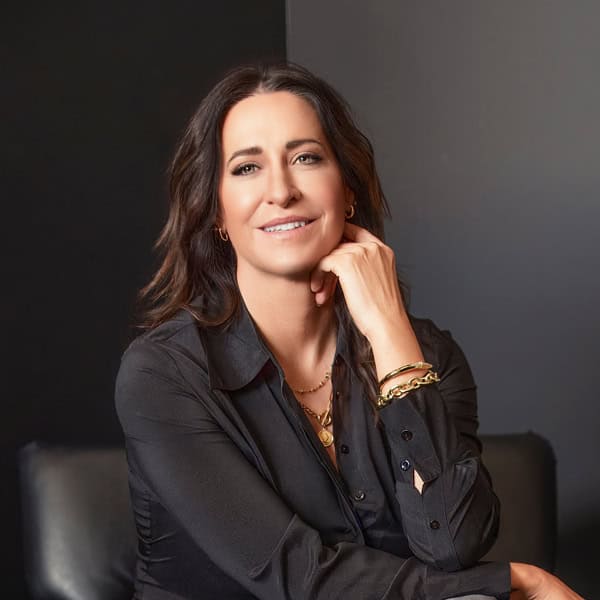
Dr. Katalina Dean
Dr. Katalina Dean is the founder and clinical director of Scoliosis Center of Utah, in Midvale, UT. Her team specializes in posture correction, spinal rehabilitation, and non-invasive scoliosis care and bracing.
Call Today
Do You Qualify for Care?
Schedule an Appointment Below