
Blogs
Can You Play Soccer with Scoliosis? Safety Guide
Activity restrictions/recommendations are case-specific and based on a number of patient/scoliosis variables: patient age, scoliosis type, severity, and location. Scoliosis ranges widely in severity from mild to severe, and severe cases are the most likely to involve activity restrictions.
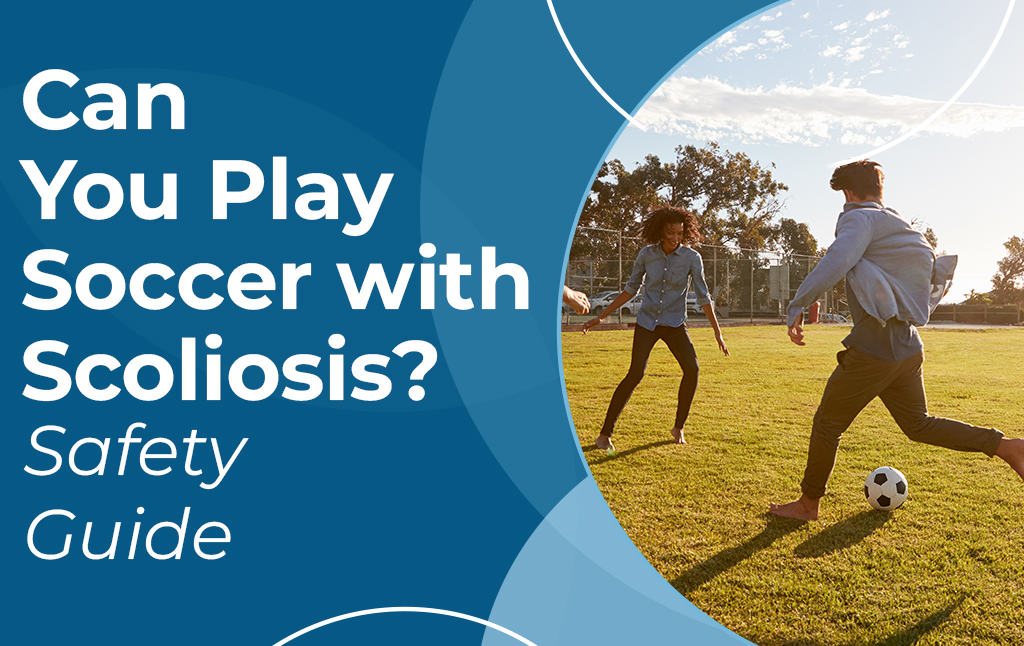
Most people with scoliosis can play soccer, but no sport or activity should be attempted without being approved by a patient’s treatment provider. Soccer can be good for scoliosis patients by building core strength, coordination, and its symmetrical movement can improve balance.
Before getting to the potential pros and cons of playing soccer with scoliosis, let’s talk about why some sports need to be approached with caution.
Scoliosis and Sports Participation
There was a time when the place of exercise in scoliosis treatment was questioned, and there was also a time when a diagnosis of scoliosis was thought to mean a life of limitations.
Over the years, we have learned that exercise is not only beneficial for scoliosis patients, but it can also be an essential nonsurgical treatment option.
People with scoliosis have developed an unnatural sideways spinal curve that rotates, and this introduces uneven forces to the spine, its individual structures, its surroundings, and the entire body.
Scoliosis disrupts the spine’s alignment, balance, and stability, making it vulnerable to injury and strain.
Scoliosis is progressive, so a focus of treatment is on counteracting progression, and any sport or exercise that has the potential to increase curve progression should be avoided.
Because there is so much variance from one case of scoliosis to the next, treatment plans, and activity recommendations, need to be fully customized.
Sports and exercise that overuse one side of the body, involve repeated shock from collision, don’t encourage symmetrical movement, and introduce more compression to the spine are generally restricted or require modifications.
Soccer and Scoliosis
 When a sport is approved for a scoliosis patient, its potential benefits outweigh the potential risks, and soccer is considered a low impact sport with a lot to offer its participants.
Soccer can help scoliosis patients increase core strength, reduce pain, improve posture, and balance.
Increasing Core Strength
The spine needs to be supported by strong and balanced muscles for optimal support and stability.
Strong abdominal and back muscles support spinal alignment and can help prevent curve progression. Because soccer involves constant movement, it builds endurance and strengthens the lower back, while helping to maintain spinal flexibility; increasing spinal rigidity is an effect of progression.
The more rigid the spine is, the less responsive it will be to treatment, so increasing spinal flexibility increases potential treatment efficacy.
A strong core that supports spinal alignment also supports healthy posture and movement.
And when it comes to scoliosis pain, increasing abdominal and back muscle strength means less pressure on the spine for pain relief.
Improving Balance and Coordination
Common effects of scoliosis include disruptions to posture, balance, coordination, and gait, and soccer improves balance and coordination so may minimize certain symptoms of scoliosis.
Because of the continuous movement involved in playing soccer and core strengthening benefits, improvements to a patient’s strength and posture further impact balance and coordination.
In scoliosis patients, the center of gravity can shift due to the asymmetrical nature of scoliosis disrupting balance, and a strong core can help maintain a strong center of gravity.
Improving Muscle Balance
Another common effect of scoliosis involves the development of a muscular imbalance; the spine’s unnatural curve and rotation can pull its surrounding muscles in different directions. Muscles on one side of the spine attempt to counteract the spine’s unnatural pull by working harder, while muscles on the opposite side become weaker.
Because soccer works the body and muscles symmetrically through symmetrical movement, it can improve muscle balance to further improve the spine and body’s overall stability.
Cardiovascular Benefits
 Soccer is also a cardiovascular workout that promotes heart health, improves sleep, lowers blood pressure, improves circulation (important for spinal-disc health), mood, reduces stress, promotes weight loss and increases energy: all factors with potential to make the spine and body more responsive to treatment.
Risks of Soccer with Scoliosis
While most patients with mild and moderate scoliosis can play soccer, for severe and/or atypical curves, soccer may cause pain and further breathing difficulties (breathing problems are associated with severe and very severe cases).
In addition, in severe cases, the risk of falling and/or contact sports participation is generally restricted, and while soccer carries a lower-risk for collision than sports like football, falls and collisions do occur.
For scoliosis patients who have undergone spinal fusion surgery, soccer and a number of other sports are often restricted for at least 6 months following the surgery.
A soccer recommendation or restriction will be case-specific and based on patient age, curve severity, pattern, and chosen treatment plan.
Additional Sports Recommended for Scoliosis Patients
Scoliosis has been around for hundreds of years, and treatment options have evolved to include a number of scoliosis-specific exercise-based treatment approaches.
The place of exercise in the lives and treatment of scoliosis patients is key, and knowing which sports are generally recommended and restricted is important for preserving spinal health and treatment efficacy.
It’s important to understand that no sport is safe without being cleared by a treatment provider, but sports considered safe for scoliosis are those that are low impact with core-strengthening benefits.
Casual swimming, certain yoga poses, road cycling, rowing, and cross-country skiing are commonly-approved activities for many scoliosis patients.
A common focus of nonsurgical scoliosis treatment is the power of scoliosis-specific exercise to prevent curve progression, increase core strength, spinal flexibility, and improve posture: all potential effects of playing soccer with scoliosis.
Conclusion
Scoliosis is a progressive spinal condition that can change over time, so activity restrictions/recommendations can also change over time.
It’s important for scoliosis patients to stay active and cultivate a healthy activity level for a spine- and scoliosis-friendly lifestyle, and while no sport or exercise should be attempted without prior approval by a scoliosis patient’s treatment provider.
A scoliotic spine is misaligned, making it more vulnerable to injury and progression, and while there are no treatment guarantees, scoliosis can be highly treatable.
Any activity or sport that places the spine under excess strain can interfere with treatment, which is why activity recommendations are also customized and case-specific.
Soccer offers a number of potential health benefits for scoliosis patients from increasing core strength for more support and stability for the spine, pain relief, and postural improvement.
Soccer also involves continuous symmetrical movement that builds endurance and works muscles symmetrically, so can counteract a common effect of scoliosis: muscular imbalance.
Strong and balanced muscles don’t just improve spinal support, it promotes healthy movement, posture, and improves the entire body’s balance and stability.
When combined with the potential cardiovascular benefits of soccer, the strengthening effects of scoliosis have a lot to offer scoliosis patients, including increasing potential treatment efficacy.
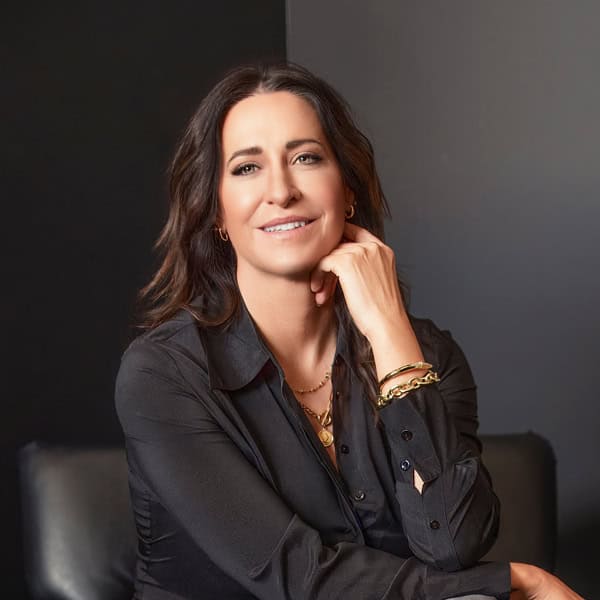
Dr. Katalina Dean
Dr. Katalina Dean is the founder and clinical director of Scoliosis Center of Utah, in Midvale, UT. Her team specializes in posture correction, spinal rehabilitation, and non-invasive scoliosis care and bracing.
Call Today
Do You Qualify for Care?
Schedule an Appointment Below