
Blogs
Is Scoliosis Genetic? What You Need to Know
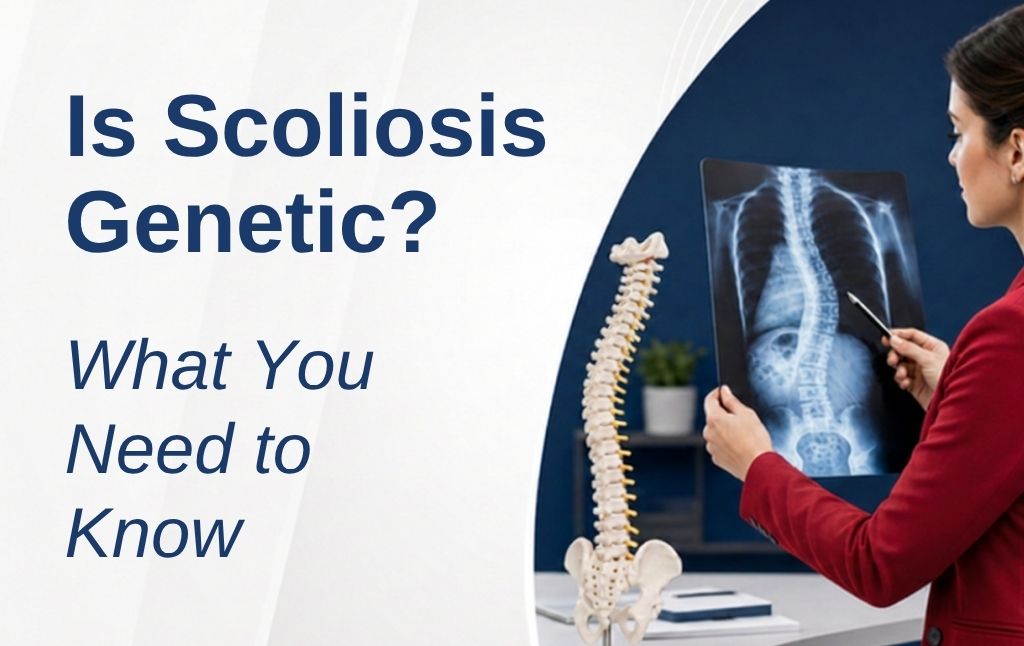
There are different types of scoliosis determined by causation, and the most common type of scoliosis to affect all ages is idiopathic scoliosis: no known cause. Most known cases of scoliosis are idiopathic. Known causes of scoliosis include neuromuscular disease and degenerative instability.
Scoliosis is generally considered more familial than genetic. Despite the prevalence of scoliosis, a single scoliosis gene that accounts for the onset of idiopathic scoliosis has not been identified; however, a family history is considered a primary risk factor. Families share more than just genes.
We don’t always know what triggers the initial onset of a patient’s scoliosis, but what becomes more important is how a diagnosis is responded to with treatment.
Is Scoliosis Genetic?
With current estimates as high as seven million people currently diagnosed with scoliosis in the United States, and as a leading childhood spinal condition, scoliosis education is important.
When it comes to treating scoliosis, early diagnosis and treatment are key, and as a progressive condition triggered by growth, childhood scoliosis, in particular, needs a proactive treatment plan.
Scoliosis affects all ages, but is most commonly diagnosed during adolescence as adolescent idiopathic scoliosis, and parents and patients often ask what caused the condition to develop initially.
Naturally, parents want to know if scoliosis is a condition they passed on to their child, and it can be difficult to hear that in most cases of scoliosis, we don’t know what triggers the onset, but we know they’re most progressive during periods of rapid growth.
We also know that there are important scoliosis risk factors, one of which is family history. A genetic condition can be caused by a single gene with a mutation that changes its function, chromosomal abnormalities including too many, too few, or chromosomes with structural abnormalities.
There are also multifactorial conditions, such as scoliosis, that are caused by a combination of variables including environmental, familial, and genetic factors.
Despite extensive research on the etiology of scoliosis, a single gene accounting for its development has not been identified, nor has a specific scoliosis chromosomal abnormality been found; while there is still debate on the subject, it’s widely accepted that idiopathic scoliosis is a complex multifactorial condition.
While idiopathic scoliosis isn’t genetic and can’t be prevented, there are certain risk factors that parents should be aware of.
Scoliosis Risk Factors
We know that scoliosis is most commonly diagnosed at the onset of puberty in adolescents, and we also know that females are more frequently diagnosed, and are also significantly more likely to experience rapid progression that requires a more comprehensive treatment approach than males.
If a patient is being screened for scoliosis, part of the process involves taking a patient’s medical and family history, and if there is a family member(s) already diagnosed with scoliosis, this increases the patient’s likelihood of a diagnosis; this is where it can get confusing. If scoliosis isn’t genetic, why is a family history considered a risk factor?
Families share more than just their genes, and when it comes to a multifactorial condition like scoliosis, genetic and/or familial factors can combine with environmental factors and contribute to the development of idiopathic scoliosis
Families do share genes, but they also commonly share body type, lifestyle, diet, socioeconomic factors, personality traits, posture, and so much more.
So for parents of children approaching adolescence, particularly females with a family history, regular and early screening is recommended.
There are no treatment guarantees, but when scoliosis is diagnosed while still mild and treatment is started while curves are small and flexible, the spine can be highly responsive and treatment may be more successful.
So what you need to know about the genetic nature of scoliosis is that having a family member already diagnosed with scoliosis doesn’t guarantee more diagnoses, but a family history does increase the likelihood of another diagnosis.
Considering the potential benefits of early diagnosis and treatment, particularly in cases of childhood scoliosis, knowing the early signs of scoliosis to watch for are key.
Recognizing Early Signs of Scoliosis for Early Detection
Particularly if there are scoliosis risk factors in place, knowing the early signs of scoliosis to watch for in children are crucial; awareness can lead to early diagnosis and treatment.
In children, the earliest signs are often asymmetrical posture, and because postural and spinal health are shaped by each other, improvements to one will benefit the other.
Early postural changes in children include uneven shoulders, uneven hips, rib flaring, and a general asymmetrical appearance.
As postural changes become more overt, movement can also change. As posture facilitates healthy movement, positural deviation can cause the development of unhealthy movement patterns, and changes to balance, coordination, and gait are additional changes to watch for.
Scoliosis and Pain
While childhood scoliosis can cause varying degrees of back and muscle pain, pain isn’t considered a primary symptom, although back and nerve pain are the main symptoms of scoliosis that lead adults to a diagnosis and treatment.
Scoliosis doesn’t become compressive until growth has stopped; while growth is occurring, the spine is being lengthened, and the lengthening motion counteracts the uneven pressure of the scoliosis.
When patients stop growing, scoliosis symptoms can become overt, and this is when many young adults realize they’ve had scoliosis for years, but were unaware.
This is the main type of scoliosis to affect adults: idiopathic scoliosis that’s pre-existing from adolescence, so in these cases, while the initial cause is idiopathic, we know its lack of early detection and treatment that leads to a diagnosis of adolescent scoliosis in adulthood (ASA).
The second most common type of scoliosis to affect adults is degenerative de novo scoliosis that develops later in life.
So we know that idiopathic scoliosis is multifactorial, is considered more familial than genetic, and makes up the majority of diagnosed cases, but what about the types of scoliosis with known causes?
Degenerative Scoliosis Causes
Degenerative de novo scoliosis affects older adults and is caused by increasing degenerative instability.
When the spine has an unnatural curve and rotation, it’s applying uneven pressure to its individual structures (discs and facet joints) and the spine’s surroundings, and if this uneven pressure continues, over time, uneven wear and tear is occurring.
Poor posture, the spine’s structural misalignment, and uneven wear and tear can trigger the onset of degenerative changes in the spine capable of causing instability, and instability will only increase alongside progression.
Early detection and intervention is key before the effects of uneven wear and tear disrupt the spine’s balance and stability to a level that causes damage and is difficult to reverse.
A focus of degenerative scoliosis treatment is improving posture, core stability, and the spine’s balance for fall prevention.
Neuromuscular scoliosis is caused by the presence of a larger neuromuscular condition such as cerebral palsy, muscular dystrophy, or spina bifida, and while these conditions have genetic factors, neuromuscular scoliosis develops as a secondary complication, so isn’t considered genetic.
Neuromuscular scoliosis treatment has to focus on the underlying cause of the scoliosis: the neuromuscular condition.
Conclusion
Here at the Scoliosis Center of Utah, patients benefit from a proactive and integrative approach to scoliosis treatment.
While it can be difficult to explain to patients that the cause of their scoliosis is unknown, what’s more important is how the scoliosis is treated.
As a progressive condition, scoliosis treatment needs are ongoing and shape the spine’s long-term health.
Most cases of scoliosis are idiopathic, with no single-known cause, and while a family history is considered a significant risk factor, this is because families share more than genes alone; while genetic factors may combine with a number of familial and/or environmental factors to trigger the onset of idiopathic scoliosis, the condition is more accurately described as familial than genetic.
Known causes of scoliosis include degenerative changes causing instability in the spine, but it’s important to understand that spinal degeneration isn’t solely related to age, but also posture and lifestyle.
Over time, factors like chronic poor posture, carrying excess weight, and low activity levels can start the degenerative process, and once initiated, it’s more difficult for the spine to maintain its natural alignment, and the development of scoliosis later in life increases the types of postural changes and uneven wear and tear that compromises the spine’s balance and stability.
When it comes to cases of neuromuscular scoliosis, the scoliosis develops as a secondary complication of a larger neuromuscular condition disrupting communication between the brain, the spine, and its supportive muscles and structures.
What’s most important to know about scoliosis is while we don’t fully understand all the factors that can contribute to the development of idiopathic scoliosis, we know what triggers progression, and we know the sooner treatment is started, the better.
If there is a family history of scoliosis, it’s recommended that early and regular screening is started prior to the onset of puberty; there are no treatment guarantees, but there are a number of benefits associated with diagnosing and treating scoliosis prior to a patient’s first significant pubescent growth spurt.
Dr. Katalina Dean
Dr. Katalina Dean is the founder and clinical director of Scoliosis Center of Utah, in Midvale, UT. Her team specializes in posture correction, spinal rehabilitation, and non-invasive scoliosis care and bracing.
Call Today
Do You Qualify for Care?
Schedule an Appointment Below