
Blogs
How Common Is Scoliosis? Key Facts Explained
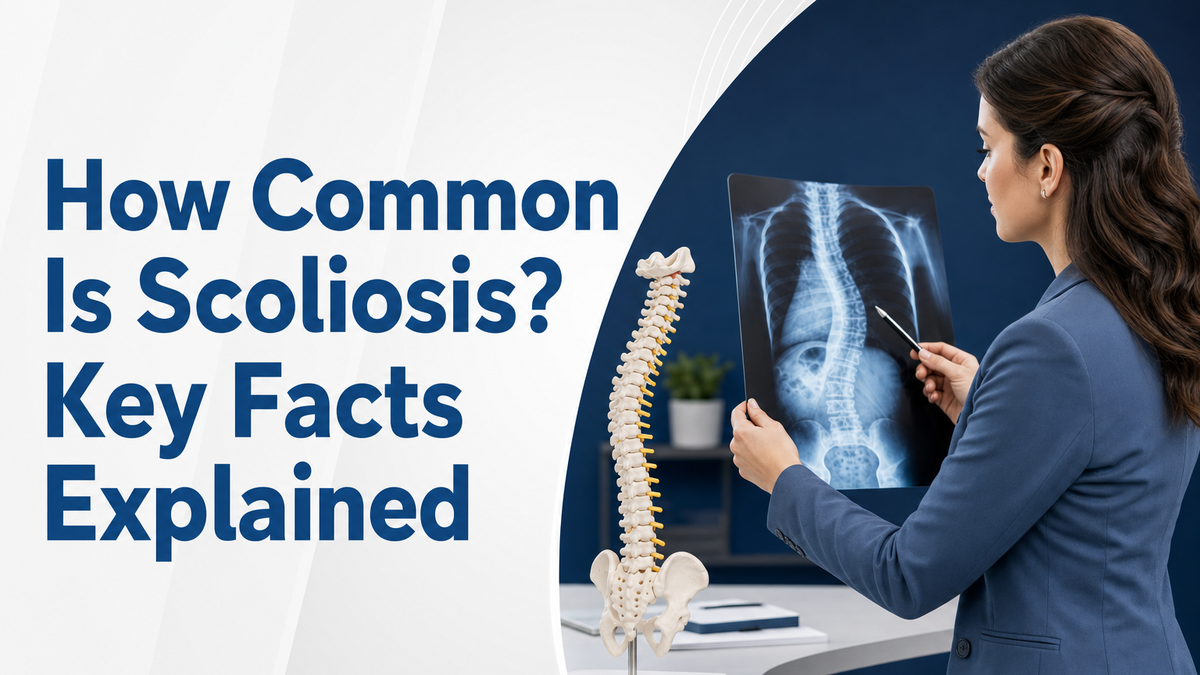
The most common type of scoliosis is adolescent idiopathic scoliosis diagnosed around the onset of puberty in females and slightly later in males. As a progressive spinal condition, most cases of scoliosis are going to increase in severity over time. There are also different types of scoliosis with varying characteristics.
 Scoliosis is a highly-prevalent spinal condition that affects all ages. There are approximately 7 million people living with scoliosis in the United States alone and it’s the leading spinal condition among school-aged children.
Treatment outcomes can’t be guaranteed, but when scoliosis is detected and treated early, there are a number of benefits.
Scoliosis Prevalence
Scoliosis is most commonly diagnosed in children, but it also affects adults. Current estimates have between 6 and 9 million people living with scoliosis in the United States alone, and as the leading spinal condition affecting young children, awareness is crucial.
The most common type of scoliosis is idiopathic scoliosis, with no single-known cause.
Idiopathic scoliosis accounts for approximately 80 percent of known diagnosed cases, and the remaining 20 percent include neuromuscular scoliosis, degenerative scoliosis, and congenital scoliosis.
Neuromuscular scoliosis is caused by the presence of a larger neuromuscular condition such as spina bifida, cerebral palsy, or muscular dystrophy.
Degenerative scoliosis is caused by increasing spinal instability due to degenerative changes, and congenital scoliosis is a rare type affecting babies born with the condition.
Adolescent Idiopathic Scoliosis
The most common type of scoliosis overall is adolescent idiopathic scoliosis, and adolescents are also the most at risk for rapid advancement because progression is triggered by growth.
Adolescent idiopathic scoliosis (AIS) also progresses faster in females, with some studies showing an AIS prevalence rate as high as 3.1 percent.
Risk factors for scoliosis include family history, gender, and age, so for young females with a family history of scoliosis, regular and early screening is recommended prior to the start of puberty; there are a number of benefits to diagnosing and starting treatment prior to an adolescent’s first significant pubescent growth spurt.
Adolescents can progress quickly due to rapid growth spurts, so how it’s managed during growth is crucial, and with progressive conditions like scoliosis, the timing of treatment is important.
Starting treatment early means the potential to address a small curve, versus a curve that has increased in severity and become more complex to treat.
Although scoliosis is more commonly diagnosed in children, the rate of scoliosis increases among the aging population.
Adult Scoliosis
The two most common types of scoliosis to affect adults include idiopathic scoliosis that’s pre-existing, most often from adolescence, and degenerative scoliosis that develops later in life.
The prevalence of idiopathic scoliosis in adults highlights the need for early detection as scoliosis that develops in adolescence and is undiagnosed and untreated is likely to continue progressing with time and growth.
Scoliosis is commonly thought of as a childhood condition, but some studies show scoliosis rates as high as 35.5 percent in adults over the age of 60, and patients between the ages of 60 and 90 show rates as high as 68 percent.
Adolescent Scoliosis in Adults
Idiopathic scoliosis in adults is known as adolescent scoliosis in adults (ASA) because the scoliosis is pre-existing from adolescence.
 Adults with idiopathic scoliosis tend to seek out assessment and diagnosis when scoliosis becomes compressive and painful.
There are multiple factors that shape a scoliosis patient’s level of pain, and compression is a primary cause of back, nerve, and muscle pain.
Scoliosis becomes compressive once skeletal maturity has been reached, and this is commonly when conditions become painful.
In children, the lack of compressive pain can be a barrier to early detection; mild scoliosis causes mild symptoms that aren’t always noticeable for those who don’t know what to look for.
Degenerative De Novo Scoliosis
After idiopathic scoliosis, degenerative scoliosis is the next most-common type to affect adults; it’s caused by increasing degenerative instability and develops later in life.
Once the spine starts to degenerate, most often starting with the intervertebral discs, it loses stability and can’t maintain its natural curves and alignment.
Most cases of degenerative scoliosis are progressive and painful, and a focus of treatment is improving the spine’s balance and stability for fall prevention.
Scoliosis Treatment Options
The most important scoliosis factor to understand is its progressive nature. Cases diagnosed as mild are unlikely to stay that way, so recommendations to merely watch and wait for signs of continued progression can lead to curves progressing unimpeded.
Scoliosis progression means the spine’s unnatural curve and rotation is increasing and the spine becomes more rigid as a result, and flexibility of the curve is a key factor when it comes to the ease of treatment.
In some cases of idiopathic scoliosis in adults, there is such a loss of spinal flexibility due to significant progression that the first line of treatment is restoring a certain degree of spinal flexibility to increase the spine’s responsiveness to treatment.
A common traditional scoliosis treatment option is spinal fusion surgery, but surgical intervention brings increasing risks, and while treatment results can never be guaranteed, particularly with early detection and intervention, nonsurgical treatment options can be highly effective.
When scoliosis is diagnosed early, treatment can be started early, and this increases the likelihood of a positive outcome.
Here at the Scoliosis Center of Utah, non surgical treatments are customized to address the specifics of a patient’s posture, symptoms, scoliosis, and treatment goals.
Nonsurgical Treatments
Chiropractic BioPhysics® can involve a number of techniques and manual adjustments to improve the spine’s position, and when combined with the potential of a scoliosis-specific rehabilitative exercise plan and corrective bracing, nonsurgical treatment options can be highly effective.
ScoliBalance® combines the most current chiropractic principles with corrective exercise and uses Mirror Image to teach postural awareness. As patients learn how best to hold their bodies for optional spinal alignment, treatment results are more sustainable.
Scoliosis-specific exercise can target the spine’s surrounding muscle balance and strength for more support, and corrective bracing can further impact the spine’s position by pushing it into a straight and neutral alignment and holding the spine and torso in an upright healthy posture.
Healthy posture and spinal alignment supports healthy movement patterns and overall spinal health.
Conclusion
Scoliosis causes the spine to curve unnaturally to the side and rotate, and as a progressive spinal condition, its nature is to get worse over time, but in many cases, scoliosis is highly treatable.
With approximately 7 million people living with scoliosis in the United States alone, it’s a common condition that warrants awareness so early detection is more likely.
There are never treatment guarantees, but cases that are diagnosed early and treated proactively are more likely to respond positively.
Idiopathic scoliosis is the most common type, and less-common types include neuromuscular scoliosis and congenital scoliosis.
A spinal curvature that’s initially diagnosed as mild can easily progress and become moderate scoliosis or severe scoliosis, but when a customized and proactive treatment plan is applied, mild cases are more likely to stay mild and not become severe cases.
Severe cases require more comprehensive treatment plans, and in some cases, spinal fusion surgery is recommended, which can have negative effects on long-term spinal health, function, and strength.
Knowing the early signs of scoliosis can help lead to early detection, so parents should be looking for uneven shoulders and hips, and the development of an arch in the rib cage is also common.
Changes to movement, balance, and coordination occur, and with progression, postural and mobility changes can become more disruptive and noticeable over time; the treatment goal is early intervention because milder curves are easier to correct than moderate and severe cases.
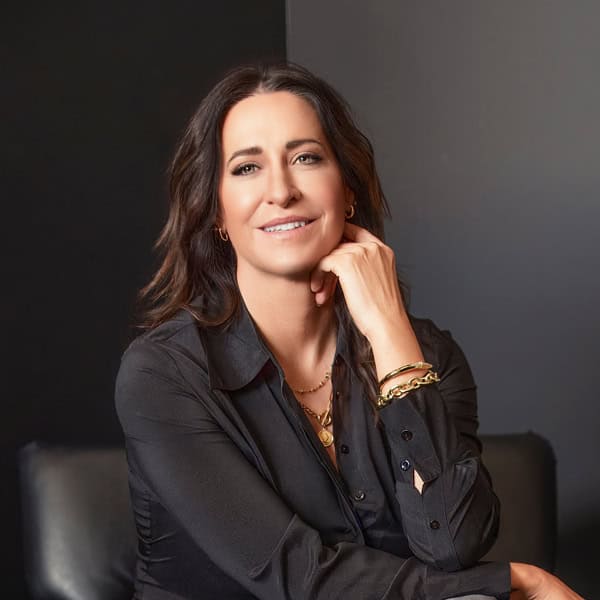
Dr. Katalina Dean
Dr. Katalina Dean is the founder and clinical director of Scoliosis Center of Utah, in Midvale, UT. Her team specializes in posture correction, spinal rehabilitation, and non-invasive scoliosis care and bracing.
Call Today
Do You Qualify for Care?
Schedule an Appointment Below