
Blogs
Scoliosis and Bracing: What You Need to Know
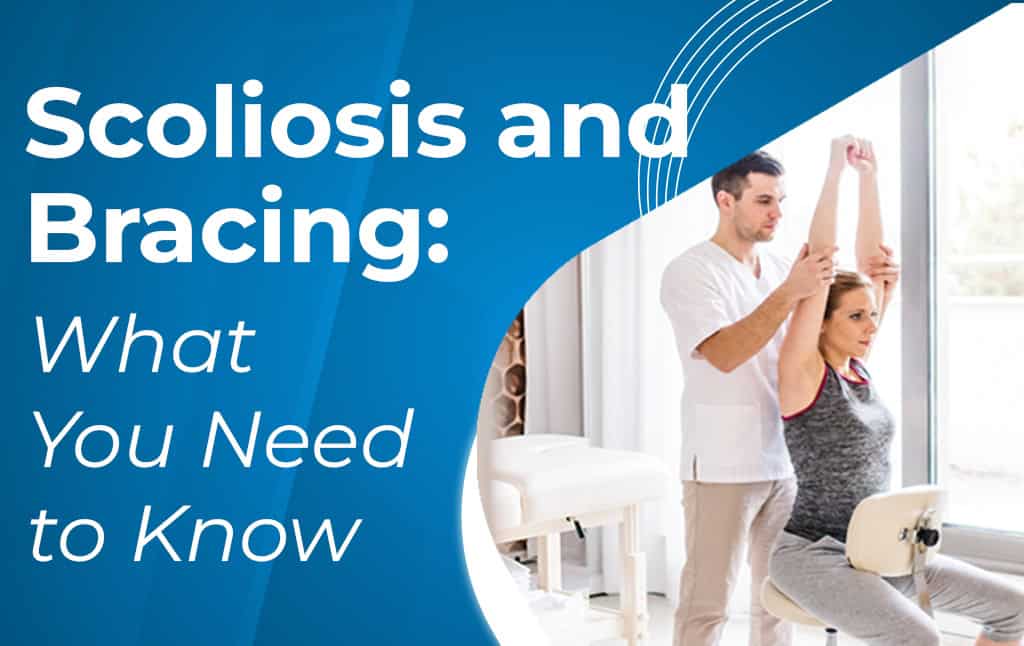
Scoliosis bracing has come a long way: from traditional braces that immobilize the spine to corrective 3-dimensional brace treatment offered as part of a proactive nonsurgical treatment approach. The ScoliBrace® applies modern principles and understanding to facilitate the best potential treatment outcome.
What you need to know about scoliosis and bracing is when combined with a proactive scoliosis-specific exercise rehabilitation program and chiropractic care, many cases of scoliosis are highly treatable. Starting treatment early widens the scope of nonsurgical treatment and scoliosis bracing.
As bracing is a regular facet of childhood scoliosis treatment, let’s start with what parents should know about scoliosis bracing.
Childhood Scoliosis
Scoliosis can affect all ages, but it’s most commonly diagnosed during adolescence as adolescent idiopathic scoliosis.
The idiopathic designation means there is no single-known cause, and most cases involve idiopathic scoliosis.
While we don’t know why most cases of childhood scoliosis develop initially, we know it’s growth that triggers progression, so children are the most at risk for rapid advancement, particularly adolescents going through rapid and unpredictable growth spurts of puberty.
How childhood scoliosis is treated during periods of growth is key, and as a progressive condition, the nature of scoliosis is to get worse over time, so the sooner treatment is started, the better.
Childhood scoliosis needs to be addressed proactively, and corrective brace treatment has proven results.
What is a Scoliosis Brace?
A scoliosis brace is an orthotic device worn snugly around the torso with the goal of impacting the spine’s position and alignment while improving overall body posture.
There are different types of braces, and while traditional scoliosis bracing has some limitations, modern corrective bracing was designed in response.
The ScoliBrace® uses an overcorrective approach to push the body’s posture into a position that counteracts the unnatural spinal curve.
The ScoliBrace® is fully customized to address the specifics of a patient’s body type, posture, and scoliosis type.
 The ScoliBrace® can be used to treat scoliosis in infants, juveniles, and adolescents, and because the ScoliBrace® is designed to work with movement, versus restricting the spine’s movement, it can be combined with other powerful nonsurgical treatment modalities.
It’s important to understand that no scoliosis brace on its own is enough to correct scoliosis, but when combined with the potential of scoliosis-specific exercise and Chiropractic BioPhysics®, many scoliosis curves can be improved and/or reversed.
Poor posture can have lasting effects on the body, and as the main effect of childhood scoliosis involves postural changes, treatment always includes restoring the body’s overall symmetry for better posture.
There is also the ScoliNight brace designed to be worn strictly at night during sleep to address flexible curves early in young children; the goal is to stop rapid curve progression early, prior to needing full-time bracing and/or surgical intervention.
While scoliosis bracing is primarily used for treating childhood scoliosis, it does also have a place in adult scoliosis correction.
Bracing and Childhood Scoliosis
Parents and caregivers need to understand that as a progressive condition, even cases diagnosed as mild can quickly progress into the moderate or severe classification.
While there are no treatment guarantees, there are direct links between early detection, early intervention, and treatment success.
One of the main benefits of starting treatment early is because as progression occurs, the size and rotation of the unnatural spinal curve is increasing, making the spine more rigid and less responsive to treatment.
So starting treatment while conditions are still mild and/or moderate can help prevent them from becoming severe and/or very severe.
Progression also causes increasing symptoms, and the longer they are left unaddressed, the harder they can be to improve and/or reverse.
Bracing is a regular facet of childhood scoliosis treatment because it’s more effective on growing spines that are more malleable and responsive.
Adult Scoliosis and Bracing
The two main types of scoliosis to affect adults are idiopathic scoliosis and degenerative scoliosis.
Idiopathic scoliosis is the most prevalent type to affect adults, and in most of these cases, patients have pre-existing scoliosis from adolescence.
Many adolescents don’t notice their scoliosis until it becomes more severe and painful; it’s common for adolescents to seek assessment once skeletal maturity has been reached because once growth stops, scoliosis becomes compressive, and compression is a main cause of scoliosis pain.
After idiopathic scoliosis, degenerative scoliosis is the most common type to affect adults, and these cases involve older adults (45+) and is caused by instability in the spine caused by natural age-related degenerative changes.
And almost all cases of degenerative scoliosis are painful and progressive, and as increasing instability is a concern, fall prevention is a focus of degenerative scoliosis treatment.
While the goal of scoliosis bracing in childhood scoliosis treatment is correction, scoliosis bracing in adults is used more for pain relief, slowing progression, and increasing stability for fall prevention.
What’s really important to understand about brace treatment is that it needs to be combined with other treatment modalities for a complete care approach.
Bracing, Exercise, and Chiropractic Treatment
Scoliosis is a complex 3-dimensional spinal condition. Not only does it range widely in severity from mild to moderate and severe scoliosis, it can also affect all ages, cause widespread effects, and is progressive in nature.
The complex nature of scoliosis necessitates the full individualization of treatment plans, and this involves apportioning a variety of treatment modalities accordingly.
 While bracing can help improve the spine’s position and alignment, it needs to be combined with additional treatments such as scoliosis-specific exercise and chiropractic care.
ScoliBalance® is a comprehensive approach to nonsurgical scoliosis treatment that combines the best of what Chiropractic BioPhysics® (CBP) and a scoliosis-specific exercise-based treatment plan has to offer.
Only 1 percent of the world’s chiropractors are certified in Chiropractic BioPhysics®, and this is offered at the Scoliosis Center of Utah; it combines the principles of chiropractic care with scientific principles to diagnose and treat issues related to a misaligned spine.
CBP works towards restoring spinal alignment, balance, and stability, and when combined with a customized scoliosis-specific rehabilitative exercise program, there are fewer limits to what nonsurgical scoliosis treatment can achieve.
Through the use of scoliosis-specific exercise programs that are customized around a patient’s specific symptoms, posture, ability, and scoliosis curve, curvature reductions, increasing spinal flexibility, improving posture, and the spine’s alignment may be possible.
Scoliosis-specific exercise can target the spine’s surrounding muscle strength and balance for more support and stability for the spine.
A focus of ScoliBalance® is teaching postural awareness through the use of Mirror Image exercise; this is key to achieving sustainable long-term treatment results as patients are taught how to position their bodies and spines to counteract the unnatural curve and rotation.
So when scoliosis bracing is combined with the potential of scoliosis-specific chiropractic and exercise, it can help improve the spine’s overall position and alignment.
Conclusion
We have learned a lot about scoliosis treatment over the years, and while there is still a lot to learn, scoliosis bracing has evolved to reflect our growing understanding of scoliosis treatment efficacy.
Traditional scoliosis bracing like the boston brace only addresses scoliosis as a 2-dimensional condition, ignoring its rotational component and limiting its potential efficacy, and many traditional scoliosis braces are mass produced so aren’t as comfortable; compliance is the main barrier to brace efficacy.
If a scoliosis brace isn’t worn precisely as prescribed, its potential is limited, and brace treatment that can’t be fully customized to suit a patient’s body and scoliosis type is less likely to be comfortable and effective.
Childhood scoliosis, in particular, can benefit from corrective bracing as the spine is more malleable and responsive to pressure-driven position changes.
Through Chiropractic BioPhysics®, improvements to the spine’s structural alignment can be worked towards, and the application of scoliosis-specific exercise may improve the spine’s surrounding muscle strength and balance, teach postural awareness, reduce flexible curves, and slow/stop progression.
For any type of long-term sustainable treatment results, patients have to have postural awareness, and this involves rehabilitative scoliosis-specific exercises that can be performed from home and as part of a scoliosis-friendly lifestyle.
Here at the Center, bracing is used as part of a complete nonsurgical scoliosis treatment approach and is combined with additional facets of treatment so scoliosis can be impacted on every level.
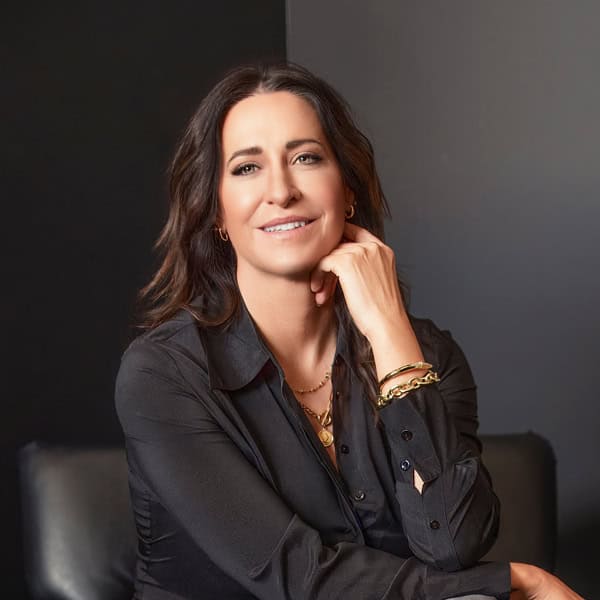
Dr. Katalina Dean
Dr. Katalina Dean is the founder and clinical director of Scoliosis Center of Utah, in Midvale, UT. Her team specializes in posture correction, spinal rehabilitation, and non-invasive scoliosis care and bracing.
Call Today
Do You Qualify for Care?
Schedule an Appointment Below