
Blogs
Running With Scoliosis: Essential Safety Tips
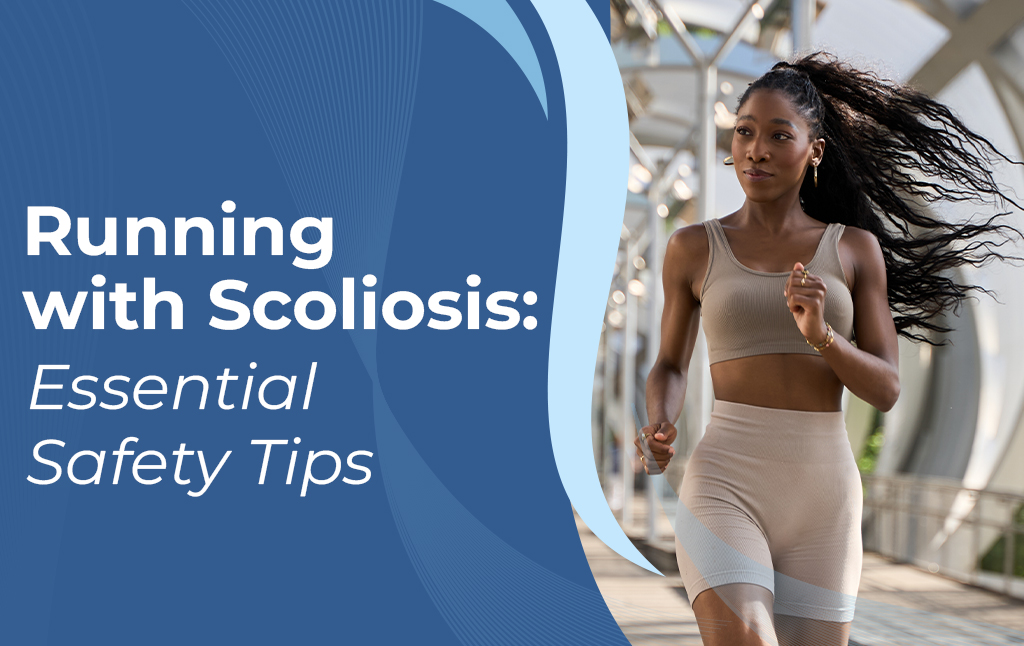
Every case of scoliosis is unique, including activity restrictions and recommendations, which is why treatment plans need to be fully individualized. Many people with scoliosis can enjoy running safely, while others will need to make modifications, and for some, it can be a restricted activity deemed unsafe.
For people with scoliosis, there are a number of safety precautions that can be taken to ensure running is safe: clear the activity with a treatment provider, ensure proper form while running, monitor distance, proper footwear, and running on softer surfaces.
For some scoliosis patients, the risks of running outweigh the potential rewards, so it’s key to seek assessment from a professional.
Scoliosis and Exercise
Scoliosis patients can still exercise; in fact, for most patients, scoliosis treatment includes scoliosis-specific exercises with corrective potential, but the key is customization.
People with scoliosis have an unnatural lateral spinal curve that rotates, meaning it twists and is a 3-dimensional condition.
Scoliosis is a progressive condition, so its nature is to get worse over time and cause increasing effects.
Running can be bad for people with scoliosis if it’s deemed unsafe by a patient’s treatment provider, but this won’t be the case for everyone.
In most cases, the more severe a patient’s scoliosis, the more likely activity restrictions are.
Scoliosis ranges widely from mild scoliosis to moderate and severe cases, and as a progressive condition, even patients diagnosed while mild can progress and become moderate and/or severe.
Proactive treatment is needed to counteract the condition’s progressive nature, and part of treating the whole patient includes lifestyle guidance, including tips on how to cultivate a safe and healthy activity level with appropriate activities.
When Running is Bad for Scoliosis
Running can be bad for scoliosis if the curve is too severe as running can increase compression and worsen the curve.
Scoliosis becomes progressive when skeletal maturity has been reached, and the compressive force of the curve on the spine and its surroundings is a main cause of scoliosis pain.
 Because running involves repeated shock from impact with the ground, it can introduce more compression and mechanical stress to the spine.
Running with scoliosis can also be deemed unsafe if it causes increasing back and/or muscle pain.
Effects of scoliosis include postural and mobility changes: two factors that shape a patient’s running form.
For patients experiencing significant postural and mobility changes, it can be difficult to maintain an economical gait and proper running technique, so running with scoliosis may not be recommended as it can further exacerbate the condition’s effects.
So for some patients, running with scoliosis can be considered too risky, but for others, it can offer a number of benefits.
Potential Benefits of Running with Scoliosis
Regular exercise offers a number of benefits for everyone, and for people with scoliosis, those benefits can be particularly helpful in terms of treatment efficacy, but each case is unique and needs to be assessed by a scoliosis specialist.
Potential benefits of running with scoliosis include increasing core muscle strength and balance. The spine needs help from its surrounding muscles to provide support and stability, and running with proper form engages core muscles symmetrically, supporting symmetrical movement.
Maintaining Core Strength
In fact, a focus of nonsurgical scoliosis treatment is on increasing core strength because a strong core provides spinal support, stability, and also supports healthy posture.
Running with proper form also works the body’s muscles symmetrically, and a common effect of scoliosis is a muscular imbalance, so maintaining a strong core can counteract that potential effect.
 When paired with proper stretching beforehand, running can also increase spinal flexibility, which is key to treatment efficacy; one of the main benefits to being proactive with treatment is preventing progression and increasing spinal rigidity that makes the spine less responsive to treatment.
Maintaining a Healthy Weight
Running can also help support a healthy weight; carrying excess weight is bad for the spine as it adds extra pressure and increases mechanical stress.
Carrying excess weight also interferes with posture as it makes it more difficult to maintain a straight and upright position, and over time, this can contribute to the development of unhealthy movement patterns and degenerative changes within the spine.
Cardiovascular Benefits
The overall cardiovascular benefits of running boosts fitness and mobility while increasing circulation.
Regular cardiovascular activity means blood is circulating properly throughout the body: key for organ and muscle health.
Circulation can also shape spinal-disc health as the discs that sit between adjacent vertebrae don’t have their own vascular supply so are generally the first spinal structures to degenerate.
The discs provide the spine with structural support, prevent friction during movement, act as the spine’s shock absorbers, and facilitate spinal flexibility, so keeping the discs hydrated through regular movement like running is essential for overall spinal health and function.
When it comes to an activity’s health benefits, mental health effects can be undervalued, and in addition to the physical health benefits of running, there are also the mood-enhancing benefits of regular exercise, improved sleep, and energy: all factors that improve a patient’s ability to handle the rigors of scoliosis treatment.
For scoliosis patients who are comprehensively assessed and cleared for running, there are some simple safety tips to help minimize potential risks.
Safety Tips for Running with Scoliosis
The ultimate safety tip for running with scoliosis is to seek assessment and guidance from a scoliosis-specific physical therapist. A gait analysis can help with developing a good stride and body position while running.
Proper Running Technique
Proper running technique is important to ensure the stress from impact is evenly distributed up the lower body and spine.
Running with a straight upright posture with the head properly aligned over the torso is key; looking down while running increases the weight of the head on the cervical spine.
Short-Distance Running versus Long-Distance Running
For people with scoliosis, short distance running is favored over long distance running as it minimizes the exposure to repeated shock.
In addition, being mindful of running surfaces can also help as running on softer running tracks, as opposed to uneven trails and hard roadways, can reduce impact and risk of injury through a fall.
Short-distance running is safer for people with severe scoliosis because it minimizes repeat compression from impact with the running surface.
Wearing Proper Footwear
Another common effect of scoliosis includes an arm and leg-length discrepancy.
Scoliosis can cause uneven hips and pelvic obliquity, making the legs different lengths, and any leg length discrepancy needs to be addressed so a proper economical running posture and technique can be maintained.
Custom orthotics can help equalize uneven leg lengths, and proper supportive foot wear is necessary for anyone to run safely, with or without scoliosis.
Conclusion
Is running with scoliosis safe for everyone? Activity recommendations for scoliosis patients are case-specific, but for many patients, with guidance and modifications, the potential benefits of running outweigh the potential risks.
If approved by a patient’s treatment provider, running with proper technique can increase core strength and spinal support, help maintain spinal flexibility, a healthy weight, proper posture, and improved circulation helps with disc health and function.
Being mindful of proper form, running surfaces, footwear, and running for shorter distances are safety tips that can minimize the potential risks associated with scoliosis and running.
Here at the Scoliosis Center of Utah, scoliosis treatment is proactive, customized, and integrative, and treatment plans are shaped by a comprehensive initial assessment that will include likely activity restrictions and recommendations.
While treatment results can never be guaranteed and the place of exercise in scoliosis treatment wasn’t always understood, there are now complete exercise-based approaches to addressing scoliosis that offer corrective potential.
When it comes to minimizing potential activity restrictions and effects of scoliosis, the key is a proactive and customized treatment plan that works towards restoring the spine and body’s balance and stability.
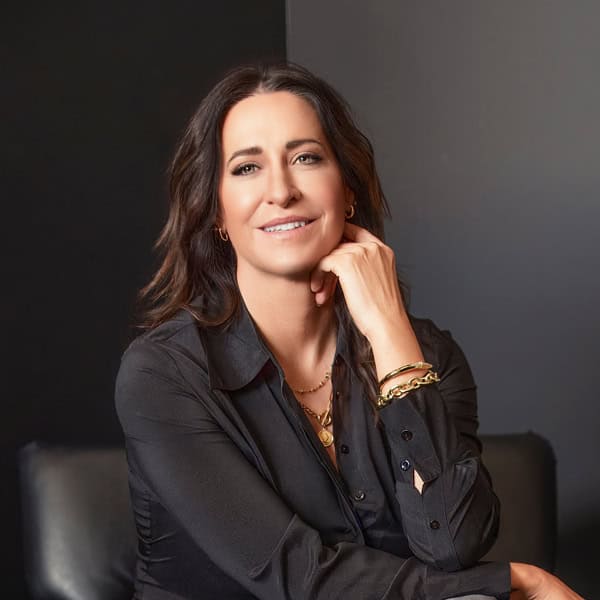
Dr. Katalina Dean
Dr. Katalina Dean is the founder and clinical director of Scoliosis Center of Utah, in Midvale, UT. Her team specializes in posture correction, spinal rehabilitation, and non-invasive scoliosis care and bracing.
Call Today
Do You Qualify for Care?
Schedule an Appointment Below